
How Much Does AI SEO Cost? A Guide to Pricing and Services

A few years ago, ranking on page one was the whole game. Today, a buyer might ask ChatGPT for the best accounting software, read Google’s AI Overview, and make up their mind before visiting a single website. That shift has businesses asking a fair question. What does it actually cost to stay visible?

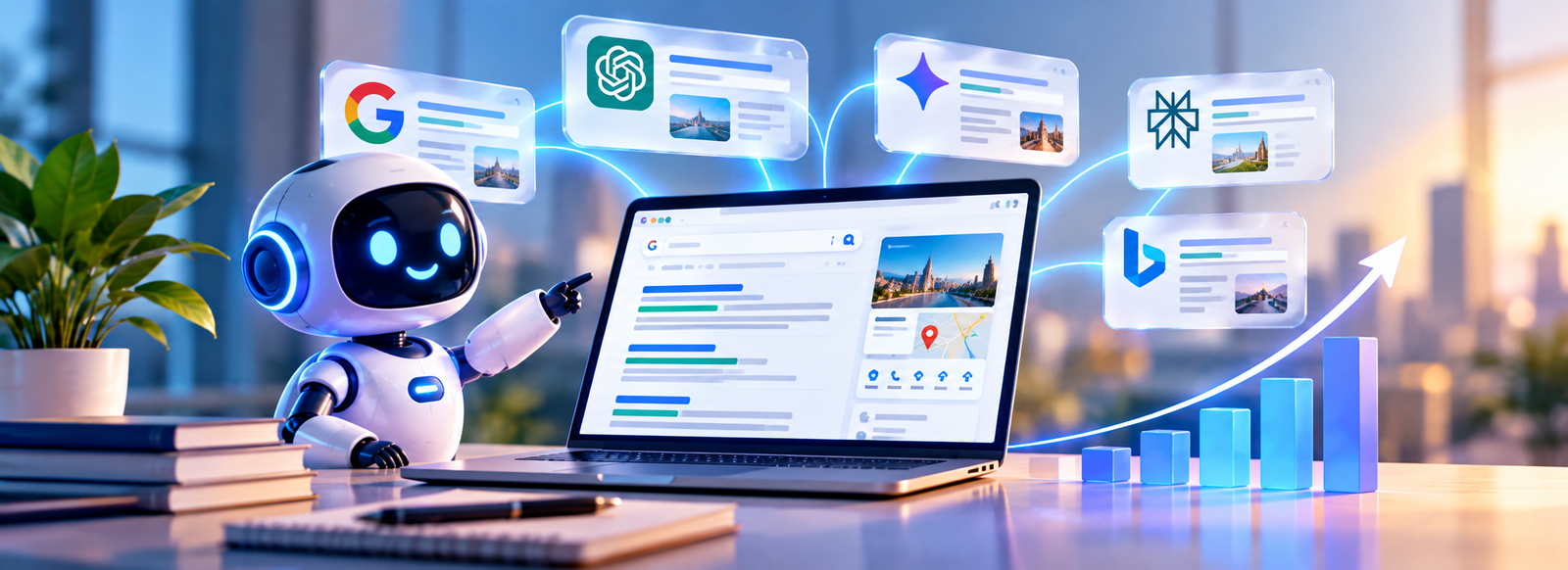
AI SEO is our term for the work that answers it. It blends traditional SEO with optimization for AI search, sharper content, and steady effort to get your brand mentioned on platforms like Gemini and Perplexity.

Pricing isn’t fixed. It moves with your business size, how complex your site is, who you’re competing against, which markets you target, and how much you want done. Below, we walk through realistic price ranges, what a package should include, and how to tell whether the spend is paying off.

How Much Does AI SEO Cost in 2027?

The short answer? Anywhere from $300 to $15,000+ a month. A local bakery and a national ecommerce brand will sit at opposite ends of that scale, and both can be paying a fair price.

AI SEO Service Level Estimated Monthly Cost (USD) Best Suited For
Basic AI SEO $300–$800 Small businesses and startups
Growth AI SEO $800–$2,000 Growing businesses and established websites
Advanced AI SEO $2,000–$5,000 Competitive industries and larger websites
Enterprise AI SEO $5,000–$15,000+ Large websites and multi-market businesses

Treat these numbers as planning ranges. They aren’t verified market averages or fixed industry rates, and actual pricing shifts with the provider, location, scope, and deliverables. You’ll also see three ways of billing. Retainers are monthly and cover ongoing work. Audits are one-off reviews that end with a list of fixes. Project fees apply to a defined job, like adding schema to 40 service pages.

Here’s where many buyers trip up. AI SEO isn’t a standardized product with one universal price, so two quotes with the same name can hide very different work. One agency might fold technical SEO, content, digital PR, and AI visibility reports into a single fee. Another might bill each one separately and hand you four invoices. So don’t compare the totals first. Compare the deliverables. A $600 package that skips content and reporting can end up costing more than a $1,200 one that covers everything.

What Is Included in AI SEO Services?

1. Traditional SEO and Technical Optimization

None of the newer work matters if search engines can’t crawl your site. So the campaign starts here, with indexing fixes, Core Web Vitals, page speed, internal links, and a clean site structure. Schema markup goes in at this stage too, along with keyword research mapped to what people really mean when they search.

2. Answer Engine Optimization (AEO)

AEO is about being the answer, not just a result. We rewrite pages so a search engine can lift a clear, accurate reply straight from them. That usually means tighter FAQ sections, question-led headings, and copy that sounds like how people talk to a voice assistant.

3. Generative Engine Optimization (GEO)

When someone asks an AI tool for a recommendation, Generative Engine Optimization is what improves your odds of getting named. Being named once is luck. Being named often takes groundwork. It relies on topical authority, believable brand signals, well-defined entity details, and content that handles complicated questions without skipping steps.

4. Large Language Model (LLM) Visibility Optimization

How does ChatGPT describe your company right now? What about Gemini or Perplexity? This part of the work tracks those mentions and citations, cleans up inconsistent brand details online, and finds third-party sites where a mention would carry weight.

5. AI-Assisted Content Optimization

Gap analysis, topic clusters, briefs, and page refreshes all live here. AI tools speed this up a lot. But every draft still gets a human edit for accuracy, originality, real expertise, and whether it actually helps the reader.

That last point applies to the whole campaign. AI can handle the grunt work. Strategy, technical calls, editorial judgment, and month-after-month measurement still need people who know what they’re doing.

AI SEO Pricing by Service Type

Maybe you don’t need the full package. Plenty of businesses just want one piece, such as an audit before a redesign or AEO work on their top pages. Here’s how each service tends to be billed.

Service Indicative Pricing Model
AI SEO audit One-time project fee
AI keyword and content analysis One-time or monthly
AEO services Monthly retainer or project-based
GEO services Monthly retainer or project-based
LLM visibility optimization Monthly retainer or project-based
AI content optimization Per page, per project, or monthly
Technical SEO improvements Audit fee plus implementation costs
AI SEO reporting and monitoring Monthly retainer or tool subscription

The name of a service tells you surprisingly little about its price. Workload decides it. Optimizing five pages on a law firm’s site might take a few days. Doing the same for 800 product pages on a fashion store is a different project altogether, even though both get called “AI content optimization.”

Technical SEO is the same story. An audit might turn up three quick fixes, or it might uncover months of developer work. That’s why implementation is usually quoted on its own. Ask about it before you sign.

We don’t put fixed prices on individual services until we’ve looked at the website. Anyone who quotes a flat rate without seeing your site is guessing. When you ask for a quote, push for a breakdown of the tasks, the timeline, and what you’ll have in hand at the end.

What Factors Affect AI SEO Pricing?

1. Website Size and Complexity

A 12-page site for a physiotherapy clinic is a small job. An online store with 20,000 URLs is not. Bigger sites bring crawl budget problems, duplicate pages, and faceted navigation issues, and a single template change can ripple across thousands of pages.

2. Industry Competition

Ranking a dentist in a mid-sized town is one thing. Competing with banks for “best credit card” is another. Crowded sectors like finance, legal, health, and SaaS need more content, more authority, and more frequent tweaks, because rivals aren’t standing still either.

3. Current SEO Performance

Some sites arrive in good shape. Others come with broken redirects, thin pages, almost no organic traffic, and zero brand mentions anywhere. That second group needs a few months of cleanup before growth work can even start, and cleanup costs money.

4. Content Creation and Optimization Requirements

Refreshing what you already have is the cheaper route. A refresh might take hours per page. A new expert guide can take a week. Building new landing pages, topic clusters, expert-written guides, and supporting resources takes research, writing, and review time, which pushes the budget up.

5. Number of Target Markets and Languages

Going after the UK, the UAE, and Australia means three rounds of keyword research. Add a second language and you need proper localization, not a quick translation. People in different countries phrase questions differently, and AI tools notice.

6. AI Platforms and Search Experiences Covered

Is the goal just Google AI Overviews? Or do you also want visibility in ChatGPT, Gemini, and Perplexity? Each platform sources information in its own way, so every extra platform adds tracking and testing.

7. Reporting, Tools, and Implementation

AI visibility trackers and specialist SEO tools carry subscription costs, and some agencies pass those on to you. Analytics setup takes time. So does developer support. Weekly reports cost more to produce than monthly ones, too.

8. Agency Expertise and Team Involvement

At the low end, you might get an automated report and a monthly email. At the high end, you get SEO specialists, content strategists, developers, and digital PR people working on your account. The price gap is real, but so is the gap in results.

Next time two quotes look wildly different, run them through this list. Ask each provider which of these factors drove their number. The answers will tell you more than the totals do.

AI SEO vs. Traditional SEO: Is AI SEO More Expensive?

People often talk about AI SEO as if it replaced traditional SEO. It didn’t. It sits on top of it, so the two share far more than they differ. Good AI SEO still depends on crawlable pages and helpful content.

Comparison Point Traditional SEO AI SEO
Core objective Improve organic search visibility Improve organic and relevant AI search visibility
Keyword strategy Keywords and search intent Keywords, conversational queries, entities, and intent
Content strategy Rankings and user needs Rankings, answer quality, context, and citation potential
Technical optimization Crawling, indexing, performance, and structured data Core technical SEO plus relevant AI search considerations
Measurement Rankings, traffic, and conversions Traditional KPIs plus AI visibility, mentions, and citations
Pricing Depends on scope and competition Depends on scope, competition, and additional AI visibility work

The clearest difference shows up in reporting. A traditional SEO report covers rankings, traffic, and conversions. An AI SEO report includes all of that, plus how often AI tools mention or cite your brand. That second set of numbers is newer, and honestly, the tools that measure it are still maturing.

Keyword research changes too. Rather than chasing short phrases like “CRM software,” AI SEO also looks at full questions (“which CRM works best for a 10-person sales team?”) and at entities, meaning the brands, products, people, and places AI models link to you. Get those right, and AI tools have a much clearer picture of what you sell.

Now, the cost question. Is AI SEO more expensive? Not by default. If your site already has solid technical SEO and useful content, moving into AI SEO is mostly a shift in priorities. A site starting from zero is a different story. The bill goes up when the campaign needs fresh research, a lot of new content, technical builds, or monitoring across several AI platforms. You’re paying for added scope. The label itself doesn’t cost extra.

How to Choose the Right AI SEO Package for Your Business

1. Startups and Small Businesses

Keep it lean. Get the technical basics sorted so Google and AI crawlers can read your site without trouble. Pick a short list of keywords your customers really use, and put your effort into a handful of strong service pages. If you serve a local area, your Google Business Profile deserves attention as well. Basic AI search monitoring is plenty at this point. It tells you whether AI tools mention you at all, without eating up the budget you need for the fundamentals.

2. Growing Businesses

You’ve got traction. Now the job is in depth. Expand into related topics, improve pages that already pull in some traffic, and earn mentions from sites your audience trusts. This is also the stage to start tracking AI citations next to your organic numbers. Over a few months, you’ll see which topics win on both fronts, and that tells you where the next round of budget should go.

3. Ecommerce Businesses

For online stores, category and product pages are where the money is made, so they get first priority. Product schema helps search engines and AI shopping tools read your prices, stock, and reviews correctly. With hundreds or thousands of SKUs, content updates have to work at scale, often through templates. And track conversions closely. Traffic that doesn’t buy isn’t much of a win.

4. Enterprise and Multi-Location Businesses

Scale is the challenge here. Technical SEO has to hold up across thousands of pages, several markets, and sometimes more than one domain. Brand details need to match everywhere, or AI tools may give people conflicting answers about you. You’ll also need clear ownership, solid reporting, and good coordination between marketing, product, and dev teams. Budgets run higher at this level, but so does the upside.

Whichever group you’re in, pick the package that fits today. You can always scale up once the results justify it.

AI SEO Pricing Models: Monthly Retainer vs. One-Time Project

1. Monthly Retainer

This is the usual choice for steady growth. Your fee covers ongoing optimization, content updates, monitoring, reporting, and strategy changes as AI search shifts. Retainers suit businesses that see SEO as a long-term channel rather than a one-time fix.

2. One-Time AI SEO Audit

An audit gives you a full technical review, a content gap analysis, an AI visibility check, and a ranked list of what to fix first. It’s a good way to test an agency before you sign anything longer.

3. Project-Based AI SEO

Some jobs have a clear start and finish. A website migration, a batch of 20 landing pages, or a structured data rollout all fit here. You agree on the scope, the work gets done, and that’s it.

4. In-House AI SEO vs. Agency Services

Hiring your own team means salaries, tool subscriptions, training, and developer time. An agency bundles the people and tools into one fee. For most small and mid-sized firms, that’s easier to budget for. Larger firms with constant SEO needs often find an in-house team pays off over time. The table below sums up when each model makes sense.

Pricing Model Best Suited For Commitment
Monthly retainer Steady, long-term growth Ongoing
One-time audit Clear diagnosis before investing Single project
Project-based Fixed tasks like migrations or schema Defined timeline
In-house team Large firms with constant SEO needs Long-term hiring
Agency services Expert support without hiring Flexible

Frequently Asked Questions About AI SEO Pricing

How much does AI SEO cost per month?

Most businesses spend somewhere between $300 and $15,000+ a month. A small local business can often get started near the bottom of that range. Competitive industries and large sites sit much higher. Your final number comes down to the size of your website, your goals, your competition, and exactly which services the package covers.

Is AI SEO more expensive than traditional SEO?

Not necessarily. AI SEO uses the same foundation as traditional SEO, so a lot of the work overlaps. The price only climbs when you add extra research, more content, technical builds, or tracking across tools like ChatGPT, Gemini, and Perplexity. For sites with good SEO already in place, the jump in cost can be fairly small.

Can small businesses afford AI SEO?

Yes. A small business doesn’t need an enterprise plan. A focused package covering technical basics, a few key pages, local visibility, and light AI monitoring can fit a modest budget. There’s no need to pay for everything on day one. Start there, see what moves, and widen the scope once you can point to results in search and in AI answers.

What is included in an AI SEO package?

Most packages combine technical SEO, keyword research, AEO, GEO, LLM visibility tracking, and AI-assisted content updates. That said, every provider mixes these differently. Before signing, ask for a written list of deliverables and how often each one happens. If an agency can’t explain what you’re getting each month, treat that as a warning sign and keep looking.

How long does AI SEO take to show results?

Expect early movement in roughly three to six months for most sites. Technical fixes can pay off within weeks, but authority and AI citations usually take longer to build. There’s no shortcut. How fast you see results depends on where your site starts, how tough your competition is, and whether the work stays consistent month after month. Check our here how long does AI SEO take to show results.

Is AI SEO worth the investment?

In most cases, yes. More buyers now start their research inside AI tools, and if your brand isn’t showing up there, a competitor’s will. The investment pays off best when the campaign has clear goals, honest reporting, and a focus on leads and revenue rather than vanity metrics like impressions.

Do AI SEO agencies guarantee ChatGPT or Google AI Overview citations?

No, and be wary of anyone who says otherwise. ChatGPT and Google decide on their own which sources to cite. A guarantee here is a sales line, not a plan. What a good agency can do is raise your chances through stronger content, consistent brand signals, and solid technical work, then report honestly on how often you’re actually being mentioned.

What is the difference between AEO, GEO, and AI SEO?

AEO focuses on getting your content picked as the direct answer to a question. GEO focuses on getting your brand mentioned inside AI-generated responses from tools like ChatGPT. AI SEO is the umbrella. It brings AEO and GEO together with traditional SEO, content work, and visibility tracking, so everything runs as one plan instead of separate projects.

Conclusion: Finding the Right AI SEO Budget

There’s no magic number for AI SEO. What you should spend depends on what you want to achieve, how big and complex your site is, how hard your competitors are pushing, and how much work you hand over. Whatever the figure, tie it to results you can measure. Ask for deliverables in writing. Ask how success will be tracked.

A provider worth hiring will explain where each dollar goes without fuss. And remember that the basics still win. Sound technical SEO, genuinely helpful content, credible brand signals, and regular reporting matter more than any shortcut. Not sure where your site stands? The team at SEO India Online, an AI SEO company in India, can run an audit or put together a pricing estimate built around your goals. Get in touch, and we’ll show you exactly where the opportunities are.

How to Measure AI SEO Results: Visibility, Citations, Traffic and Leads

Search no longer starts and ends on a page of ten blue links. People now type a question into Google and get an AI Overview, or they skip the search bar entirely and ask ChatGPT, Gemini, Perplexity or Microsoft Copilot. That shift creates a real measurement problem. Keyword rankings and organic sessions still matter, but they can’t tell you whether your brand appears inside the answer itself.

To measure AI SEO results properly, you need to track brand visibility, citations in AI-generated answers, referral traffic, qualified leads and conversions together. A mention on its own proves very little. What counts is how often you appear in AI answers and whether that visibility brings in the right visitors and real business.

What Is AI SEO Measurement?

AI SEO measurement is the process of tracking how visible a website is across AI-powered search experiences and answer engines, and what that visibility is worth to the business. Traditional SEO measurement asks where a page ranks and how many clicks it earns. AI SEO measurement asks a different set of questions. Is your brand mentioned when someone asks an AI tool about your services? Is your website cited or linked as a source? Do people arrive on your site from those answers, and do they stay, engage and become leads? And does any of it finally show up in conversions and revenue? Here is how the two approaches compare.

Measurement Area Traditional SEO AI SEO
Visibility Organic rankings and impressions Brand mentions and presence in AI answers
Content Discovery Search results and indexed pages AI answers and referenced sources
Traffic Organic search sessions AI referral sessions and assisted discovery
Engagement Organic visitor behavior Engagement from AI-referred visitors
Conversions Organic leads and sales Leads and sales attributable to AI search
Performance Rankings, traffic and conversions Visibility, citations, traffic and business outcomes

Traditional SEO metrics haven’t lost their value. Strong organic visibility often supports AI visibility, because many AI systems draw on content that is already well indexed and trusted in search. Think of AI SEO measurement as an extra layer on top of your existing reporting, not a replacement for it.

What Are the Key Metrics to Measure AI SEO Results?

The clearest way to measure AI SEO results is to group your metrics into four core areas: visibility, citations, traffic and leads. Each one answers a different question, and together they show the full journey from being seen in an AI answer to winning a customer. We also add supporting engagement, content quality and revenue metrics, because they help explain why the numbers move in the first place.

1. AI Search Visibility

AI search visibility shows how often your brand appears in AI-generated answers for the topics, questions and prompts that matter to your business. The core numbers here are how frequently your brand is mentioned, what percentage of your tracked prompts include it, and your share of visibility compared with competitors. It also helps to break results down by platform, since your presence in ChatGPT can look very different from your presence in Google AI Overviews, Gemini, Perplexity or Copilot. Finally, check coverage across your main topics, services and product categories.

2. AI Citations and Source Visibility

Citations go one step further than mentions. They show when an AI platform uses your website as a source or links directly to your content. Track the total number of citations, the specific URLs being cited and how many unique pages earn them. Then look at citation frequency across your tracked prompts, your citation share against competitors, and whether the cited pages actually relate to the services you want to be known for. Watching these numbers over time shows whether your authority is growing. Keep the distinction clear, though.

3. AI-Driven Website Traffic

This group of metrics looks at the visitors who actually reach your site from AI platforms, and how good that traffic is. Start with the sessions and users referred by each AI tool, then see which landing pages receive them. From there, review engagement rate, engaged sessions, pages per session and average engagement time. Splitting new and returning visitors shows whether AI answers are introducing you to fresh audiences. Track growth month by month as well. Bear in mind that a lot of AI-assisted discovery leaves no referral trail. Many people read an answer, then search your brand name separately or type your web address straight into the browser.

4. Leads, Conversions, and Revenue

This is where AI SEO proves its worth. Track contact form submissions, demo requests, consultation bookings, phone calls and qualified inquiries. For ecommerce sites, add purchases and revenue. Calculate the conversion rate of identifiable AI referral sessions, and work out cost per lead where campaign costs can be fairly allocated. Assisted conversions matter too, because AI often plays an early role before someone converts through another channel, so look at its contribution to the sales pipeline. Treat visibility and citations as leading indicators. They suggest things are heading in the right direction.

5. Supporting Metrics: Content Quality and Search Coverage

Supporting metrics explain why your performance goes up or down. The basics come first. Search engines and AI crawlers need to reach and index your key pages, and your content should answer the questions your audience asks. Your brand details also need to match across your website, profiles and directory listings. Once those are in place, check for relevant backlinks and brand mentions, structured data that has been added and tested, and content that stays fresh and on topic. Treat these as early warning signs, nothing more. Even a well-built page with good backlinks may never get cited.

How to Measure AI Search Visibility Across Different Platforms

Each AI platform builds its answers in its own way. Some lean heavily on live web results, some cite sources openly, and others show links only occasionally. The reporting data each one makes available also varies a great deal. That is why AI visibility needs platform-specific tracking rather than one blended number. Here is how we approach each of the major platforms.

1. Google AI Overviews

Begin by identifying which of your target queries actually trigger an AI Overview. For those queries, record whether your brand or your pages appear among the cited sources. Next, monitor query-level organic visibility and the traffic tied to it in Google Search Console. Comparing changes in AI Overview presence with shifts in clicks and impressions can reveal whether an overview is drawing attention toward your page or answering the question before anyone clicks. One limitation is worth knowing. Google does not always provide AI Overview exposure as a separate, complete reporting metric, so manual checks or third-party tools usually fill the gap.

2. ChatGPT

ChatGPT measurement starts with a fixed list of prompts relevant to your business. Run them on a regular schedule and note whether your brand is mentioned in each answer. When ChatGPT shows linked sources, record which of your pages appear and which competitors sit alongside you. Over time, patterns emerge. You will see which topics and customer questions bring your brand into the conversation and which leave you out entirely. Then check Google Analytics 4 for identifiable referral traffic from ChatGPT, so you can see whether that visibility is producing actual visits.

3. Google Gemini

Gemini needs the same disciplined approach. Monitor brand mentions and source links across your core prompts, and record which topics and pages are tied to your visibility. Consistency matters a lot here. Run the same prompts, in the same way, under conditions that are as similar as possible each time, because small changes in wording, location or account settings can change the answer. When you compare results over time using the same setup, you can separate genuine progress from normal day-to-day variation. You can also spot the moment a competitor starts taking space you used to hold.

4. Perplexity AI

Perplexity tends to show its sources clearly, which makes it one of the easier platforms to track. Record brand mentions and every cited source for your tracked prompts. Pay close attention to which of your pages are referenced again and again, because those pages are doing something right and can guide future content. Review whether each citation is relevant to the topic, and note which competitors appear in the same answers. Then check GA4 for identifiable referral sessions from Perplexity to see how often those citations turn into actual visits to your site.

5. Microsoft Copilot

Copilot often sits inside tools people already use at work, such as the Edge browser and Microsoft 365, which makes it especially relevant for B2B brands. Check whether your brand appears for relevant prompts and whether your pages are referenced as sources. Track identifiable referral traffic in GA4 where it is available. Then compare your performance across your key topics and against the competitors who matter most to you. Even a small set of well-chosen prompts, checked regularly, can show whether Copilot users are likely to discover you.

Platform Primary Metrics Supporting Data Source
Google AI Overviews Query visibility, cited sources, organic traffic Google Search Console and manual checks
ChatGPT Brand mentions, linked sources, referral traffic Prompt tracking and GA4
Gemini Brand mentions, source visibility, referral traffic Prompt tracking and GA4
Perplexity Citations, cited pages, referral traffic Prompt tracking and GA4
Copilot Brand mentions, source visibility, referral traffic Prompt tracking and GA4

Platform reporting changes often, so some of these metrics may need manual checks or a third-party tracking tool to stay accurate.

How to Track AI Citations and Brand Mentions

Tracking citations works best as a repeatable process, not an occasional spot check. Start by building a prompt list from your target keywords, services, products and the real questions customers ask your sales team. Run those prompts across your chosen AI platforms using the same method every time.

For each answer, record brand mentions, source links, cited URLs and any competitors that appear. Then classify each result as a linked mention, an unlinked mention or a direct source citation, and judge whether the citation supports the topic or offer you actually care about. Repeat the cycle at regular intervals and changes become easy to spot. The formulas below turn that raw data into numbers you can compare from month to month.

Metric How to Measure It
Brand Mention Rate Prompts mentioning the brand ÷ total prompts tested × 100
Citation Rate Prompts citing the website ÷ total prompts tested × 100
Unique Cited Pages Count of distinct website URLs referenced
Citation Share Brand citations ÷ total relevant citations tracked × 100
Competitor Mention Rate Prompts mentioning a competitor ÷ total prompts tested × 100

Use one consistent definition and one stable prompt set. Different tools calculate AI visibility and citation share in different ways, so never compare figures from two tools without first checking how each one works them out. A 30% share in one platform and a 30% share in another may not mean the same thing at all.

How to Measure AI-Driven Traffic in Google Analytics 4

Google Analytics 4 is the most practical place to see what happens after someone clicks through from an AI platform. The goal has two parts. First, identify those visits accurately. Second, judge whether they are worth anything to the business. Here is how we set it up.

1. Identify AI Referral Sources

Open the Traffic acquisition report in GA4 and set the primary dimension to session source/medium. Then look for referral sources linked to AI platforms. Common ones to check include chatgpt.com, perplexity.ai, gemini.google.com and copilot.microsoft.com. Treat these as a starting point rather than a complete list. Source names change, new AI tools appear, and some platforms pass referral details differently or not at all. Review your referral list every month or so and add any new AI sources you find, so your reporting doesn’t quietly miss a growing channel.

2. Build an AI Traffic Reporting View

Once you know the sources, bring them together in one place. A useful AI traffic view tracks session source and medium, sessions and active users, landing pages, engagement rate, key events and conversions, plus revenue where it applies. The cleanest approach is a custom channel group in GA4 with an “AI Referral” channel built on a regex rule that matches your AI sources. Place that channel above the default Referral channel, because GA4 applies channel rules in order and would otherwise file these visits under Referral.

3. Measure Traffic Quality

Volume alone can mislead you. Compare AI-referred visitors with your other acquisition channels, such as organic search, paid search and direct. Then ask practical questions. Do these visitors reach your service pages? Do they read supporting content? Are they submitting forms, requesting demos or completing purchases? AI referrals are often small in number but arrive better informed, because the answer they read has already done some of the explaining. Your own data will tell you whether that holds true for your site.

Metric What It Tells You
AI Referral Sessions Volume of identifiable AI-referred visits
Engagement Rate Percentage of sessions meeting GA4 engagement criteria
Landing Page Performance Which pages attract AI-referred visitors
Conversion Rate Percentage of eligible AI-referred sessions or users completing a defined conversion
Qualified Leads Number of relevant inquiries from identifiable AI traffic
Revenue Sales value attributed to identifiable AI-referred visits

Keep one limitation in mind. GA4 captures identifiable website activity. It cannot record every visit or decision influenced by an AI answer, especially when referral details are stripped or the visitor returns later through another route.

How to Measure AI SEO Leads and Conversions

Visibility and traffic are encouraging, but on their own they don’t pay the bills. To measure AI SEO results that leadership will take seriously, you need to connect AI activity to inquiries, sales and revenue. This is the step that moves your reporting from attention to value. Let’s understand this in detail.

1. Define Meaningful Conversions

Before you count anything, decide what a conversion actually means for your business. That sounds obvious, yet it’s where a lot of AI reporting goes wrong. A B2B software firm should care about demo requests and qualified sales opportunities. A local dental clinic or law practice cares about booked appointments, calls and quote requests. An online store? Purchases and order value, plain and simple. Be strict here. Scroll depth and video plays are handy when you’re diagnosing a page, but if you count them as conversions, AI traffic will look much more valuable than it is.

2. Connect AI Traffic With Conversion Data

Knowing that AI visitors converted is only half the story. You also want to know what those conversions turned into. GA4 key events tell you which sessions ended in a form fill or a purchase. Your CRM, call tracking and ecommerce data tell you whether that lead became a paying client. Look at the pages AI visitors land on and the paths they follow, and keep the AI channel separate in your source and medium reports. From there, check lead quality and how far each lead gets in the pipeline. If your setup allows it, compare first-touch with last-touch attribution too.

3. Measure AI SEO Conversion Rate

The formula itself is simple. Conversion Rate = (Conversions ÷ Eligible Sessions) × 100

The important part is the denominator. Define it once and stick to it. If you want the conversion rate of identifiable AI-referred traffic, use AI referral sessions as your eligible sessions. For example, 18 conversions from 600 AI referral sessions gives you a 3% conversion rate. Mixing in organic or direct sessions would blur the picture, and changing the definition between months would make your trend line unreliable.

4. Measure AI SEO ROI

A practical way to evaluate return on investment looks like this. ROI = (Attributed Revenue − AI SEO Cost) ÷ AI SEO Cost × 100. Say AI-referred visits generated $12,000 in attributed revenue and your AI SEO work cost $4,000. Your ROI would be 200%. The math is easy. The hard part is honesty. This calculation only means something when revenue attribution and costs are defined consistently. Where AI influence can’t be reliably isolated, report attributable revenue separately from estimated or assisted contribution. Blending the two may produce a more impressive number, but it won’t survive a close look from your finance team. If you are comparing AI SEO packages, ask each provider how its reporting ties deliverables to leads and revenue, not just visibility.

Best Tools to Measure AI SEO Performance

No single tool gives you a complete view of AI visibility, citations, traffic and leads. You get the clearest picture by combining a few of the best SEO tools, each doing the job it does best.

Tool Primary Use
Google Search Console Organic search impressions, clicks, queries and page performance
Google Analytics 4 Referral traffic, engagement, key events and conversions
Semrush SEO visibility, keyword performance, competitor research and relevant AI visibility features
Ahrefs Organic search research, backlinks and competitor analysis
Screaming Frog Crawling, indexability checks and technical SEO diagnostics
CRM and Lead Tracking Tools Lead quality, sales opportunities and revenue tracking
AI Visibility Tracking Platforms Prompt-level brand mentions, citations and competitor visibility

Google Search Console shows real impressions, clicks and queries from Google, and its data includes searches where AI features appear, though it doesn’t report them separately. GA4 handles referral traffic, engagement and conversions. Semrush and Ahrefs support keyword, backlink and competitor research, and both now offer some AI visibility features depending on the plan.

Screaming Frog checks crawlability and technical health. Your CRM leads to revenue, while dedicated AI visibility platforms track prompt-level mentions and citations. Keep one distinction in mind. Search Console and GA4 report directly observed data, while visibility scores from third-party tools are estimates built on their own prompt samples. AI tracking capabilities also depend on the tool and subscription you pick, so check before you buy.

How to Build an AI SEO Performance Dashboard

A good dashboard turns scattered data into a story you can read in five minutes. Its job is to connect AI visibility with business outcomes, so anyone on the team can see whether being mentioned is turning into being chosen. We recommend organizing it into these sections.

Dashboard Section KPIs to Include
AI Visibility Mention rate, visibility share, platform coverage
Citations Total citations, unique cited pages, citation rate
Website Traffic AI referral sessions, users, landing pages
Engagement Engagement rate, engaged sessions, returning visitors
Leads Inquiries, qualified leads, demo requests
Conversions Conversion rate, purchases, completed key events
Business Impact Attributed revenue, cost per lead, estimated ROI
Competitor Comparison Mention share, citation share, topic coverage

Looker Studio makes it easy to pull GA4 and Search Console data into one view, with prompt-tracking results added from a spreadsheet. Review the dashboard monthly and compare results against a documented baseline recorded before any optimization work begins. Use the same prompts, platforms, conversion definitions and reporting periods every time. Without that consistency, your trends are just noise.

How Often Should You Measure AI SEO Results?

Different metrics move at different speeds, so they need different review cycles. AI answers can change from one week to the next, while traffic, leads and revenue need longer to form a meaningful pattern.

Frequency What to Review
Weekly Selected prompt checks, notable citation changes, technical issues
Monthly AI visibility trends, citation coverage, referral traffic, engagement, leads
Quarterly Competitor comparisons, content strategy, conversion contribution, ROI

Prompt-level results can swing because of personalization, location, model updates and small changes in how a question is worded. The same prompt may even produce a different answer an hour later. So never treat a single check as proof that things have improved or declined. Look for patterns that hold across several checks and reporting periods before you change strategy. One good week is encouraging. Three good months is evidence.

How to Improve AI SEO Results Based on Measurement Data

If AI Visibility Is Low

Find the gaps in your topic and question coverage first. Then make your content more relevant and your answers clearer, ideally with a direct answer near the top of each page. Strengthen topical authority by covering related questions in depth, and see our guide on how to improve your brand visibility in AI search results for a fuller walkthrough.

If Citations Are Low

Review the pages that target your most important questions. Are they genuinely useful, accurate and well organized? Improve factual accuracy, support claims with credible data, and use clear headings that make answers easy to pull out. If you would rather have specialists handle this, our generative engine optimization services focus on making your content easier for AI platforms to find, understand and cite.

If AI Traffic Is Low

Find which platforms and pages already send identifiable referrals, and learn from what they have in common. Align more of your content with the questions your audience actually asks. Before changing anything else, check your referral tracking and analytics setup. Sometimes the traffic is there and simply being misclassified.

If Leads Are Low

Look closely at the landing pages AI visitors arrive on. Is the call to action relevant to what they just read? Review forms, conversion paths and page experience for friction. Then ask a harder question. Are AI-referred visitors actually your target audience, or are you being cited for the wrong topics?

Throughout all of this, base decisions on patterns you can actually observe. No single factor controls AI visibility, so be wary of any fix that promises to.

Frequently Asked Questions About Measuring AI SEO Results

How do you measure AI SEO results?

You measure AI SEO results by tracking four core important areas: visibility in AI-generated answers, citations of your website as a source, referral traffic from AI platforms, and the leads that traffic produces. Then add engagement, conversion and revenue data to understand the business impact. Use a consistent prompt set and reporting period so results stay comparable over time.

What are the most important AI SEO metrics?

The most important AI SEO metrics are brand mention rate, citation rate, unique cited pages, AI referral sessions, qualified leads, conversion rate and attributable revenue. The first three show how visible and trusted your brand is inside AI answers. The last four show whether that visibility brings in real visitors and real business. You need both sides for a complete picture.

How can I check whether ChatGPT mentions my website?

To check whether ChatGPT mentions your website, build a list of prompts based on your services and your customers’ real questions. Run them in ChatGPT, then record whether your brand appears, which source links are shown and which competitors are named. Repeat the same prompts on a regular schedule, using the same method each time, so you can spot genuine changes.

Can Google Analytics 4 track AI search traffic?

Yes, Google Analytics 4 can track AI search traffic, as long as the AI platform passes referral data along with the visit. When it does, you’ll spot sources like ChatGPT or Perplexity in your acquisition reports, and you can group them into their own custom channel. What GA4 can’t see is the person who read an AI answer, closed the tab and searched for your brand later. That visit shows up as organic or direct instead.

How do I measure AI search citations?

Pick a fixed group of prompts that matter to your business and run them across the AI platforms you care about. Each time, note any link or source that points back to your website. After a few rounds, you can measure AI search citations properly: how often you’re cited, how many different pages earn those citations, and what share of your prompts reference your site at all. Then line those numbers up against your competitors.

How long does it take to see AI SEO results?

Honestly, it varies a lot. A site with solid authority and well-built content might pick up its first citations within a few weeks. A newer site in a crowded niche could wait months. The topic and the platforms you target play a part too. So instead of chasing a deadline, record where you stand before you begin, then follow how things move across several reporting periods as your AI SEO results take shape. A single check proves nothing.

What is the difference between AI SEO visibility and AI SEO traffic?

AI SEO visibility measures how often your brand appears in AI-generated answers, whether or not anyone clicks. AI SEO traffic measures the identifiable visits that actually reach your website from AI platforms. A brand can enjoy strong visibility with little traffic when answers fully satisfy users, so tracking both helps you understand the true value of your presence.

How can I measure the ROI of AI SEO?

Visibility is about being seen. It tracks how often your brand shows up inside AI-generated answers, even when nobody clicks. Traffic is about being visited. It counts the people who actually land on your site from an AI platform, or at least the ones GA4 can identify. The two don’t always move together. If an answer fully solves someone’s question, you get the visibility without the visit, which is why AI SEO visibility and AI SEO traffic need to be tracked separately.

Conclusion: Measure AI SEO Beyond Visibility

Getting mentioned by an AI tool feels like a win, and sometimes it is. But a mention is only the first step. Real AI SEO measurement connects visibility and citations to the traffic, leads and revenue they produce, tracked consistently across every platform your audience uses. Mentions and citations show that you can be discovered. Qualified leads and revenue show that being discovered is worth something. Start with a clear baseline, build a simple dashboard and let the data shape your next round of content and conversion improvements.

Not sure how your brand shows up in AI answers today? SEO India Online’s AI SEO services in India start with a review of your AI search visibility, citation coverage and traffic attribution, then show you where the biggest opportunities for growth are hiding.

SEO Strategy for 2026-2027: Proven Ways to Stay Ahead of the Competition

SEO continues to evolve as search engines improve how they discover, evaluate, and present information. To maintain your website’s search visibility, you need to review your existing SEO strategy regularly and adapt it to changing search behavior, technology, and user expectations.

Relying on the same SEO techniques for years can limit your website’s growth. Practices that once appeared effective may no longer deliver meaningful results, particularly when they focus on manipulating rankings instead of providing value to users. That is why keeping your SEO strategy aligned with current best practices is essential in 2026 and 2027.

Search engine optimization (SEO) helps businesses improve their visibility in organic search results, attract relevant visitors, and connect with potential customers. A well-planned SEO strategy can support these goals by improving website content, technical performance, user experience, and relevance to search queries.

With the right approach, businesses can build stronger online visibility, reach their target audience, and generate more qualified leads. SEO is not just about achieving higher rankings. It is also about helping users find useful information and making it easier for them to take the next step.

In this blog, we will explore practical SEO strategies for 2026-2027 that can help you strengthen your website’s organic presence and stay competitive in an evolving search landscape.

Keep reading to learn more!

What Is an SEO Strategy?

An SEO strategy is a structured plan for improving a website’s visibility in organic search results. It involves understanding your audience, researching relevant keywords, creating useful content, improving technical SEO, and measuring performance to identify opportunities for growth.

If you want your website to perform well in Google Search and other search experiences, you need a strategy that addresses both search engine requirements and user needs. This also means considering how AI-powered search features, including Google AI Overviews and conversational search tools, may influence how people discover and consume information.

Achieving a first-page position on Google requires consistent effort. There is no guaranteed method for reaching the top of search results. Instead, businesses need to develop a sustainable SEO marketing approach based on their goals, audience expectations, competition, and website performance.

Let’s explore the key SEO strategies that can help your business strengthen its online presence in 2026-2027.

1. Top SEO Strategies to Follow in 2026-2027

The following strategies can help you improve your website’s search visibility, attract relevant traffic, and build a stronger foundation for long-term organic growth. Adapt them to your business goals rather than following them as a fixed checklist.

1. Conduct Keyword Research Based on Search Intent

Keyword research remains an essential part of an effective SEO strategy. However, choosing keywords based only on search volume is not enough. You also need to understand what users expect to find when they enter a particular query.

Start by identifying the terms your target audience uses to search for your products, services, or information. Evaluate search intent, keyword relevance, competition, and the likelihood that a query will attract the right visitors.

For example, someone searching for “what is SEO” may want educational information, while someone searching for “SEO services for small businesses” may be looking for a service provider.

Focus on relevant keywords that match your website’s purpose and the needs of your audience. Long-tail keywords can also help you address specific questions and reach users with clearer intentions.

You can use tools such as Google Keyword Planner, Google Search Console, Semrush, and Ahrefs to research keywords, review search performance, and identify content opportunities.

Also, check: Website Optimization: A Technical SEO Guide

2. Create Helpful, Relevant, and Well-Structured Content

Publishing useful content is an important part of building a sustainable SEO strategy. A dedicated blog section can help your business answer customer questions, explain complex topics, address common problems, and demonstrate subject knowledge.

If your website already has a blog, review existing articles to identify outdated information, missing details, overlapping topics, and opportunities to improve accuracy. Update older content when there is a genuine reason to do so, rather than changing publication dates without making meaningful improvements.

If your website does not have a blog, consider creating one around the questions and challenges your audience frequently encounters.

Organize related articles into topic clusters and connect them to relevant service pages. This structure helps readers explore related information and helps search engines understand the relationship between your content.

For 2026-2027, prioritize content that demonstrates experience, expertise, accuracy, and usefulness. AI tools can assist with research and drafting, but content should be reviewed and improved by people who can verify facts, add meaningful insights, and ensure that the final result serves a clear purpose.

3. Build Quality Backlinks and Earn Relevant Brand Mentions

Backlinks can help search engines discover pages and understand how websites reference your content. However, the quality and relevance of links matter more than simply accumulating a large number of them.

Instead of relying on outdated link-building tactics, focus on earning links from relevant websites through useful resources, original research, expert contributions, digital PR, and genuine industry relationships.

You can also participate in relevant industry communities where your knowledge can help answer questions or solve problems. Share your website’s content when it adds genuine value to the discussion, not simply to place a link.

Avoid buying links intended to manipulate rankings, participating in link schemes, or publishing low-quality guest posts solely to obtain backlinks. These practices can create SEO risks and rarely provide lasting value.

A strong link-building strategy should support your website’s authority, referral traffic, and brand credibility without compromising content quality or user trust.

4. Participate in Relevant Online Communities

Online communities such as Reddit, Quora, and industry-specific forums can help you understand customer questions, identify content gaps, and build relationships with your target audience.

For example, if your business offers digital marketing services, you can participate in discussions about website optimization, search visibility, content marketing, and lead generation. Provide clear, practical answers based on your knowledge and experience.

Avoid posting promotional messages repeatedly, inserting irrelevant links, or mentioning your brand in every response. Community participation should focus on helping people rather than manipulating search rankings.

Although these activities can generate referral traffic and brand exposure, they do not guarantee higher organic rankings. Their value comes from relevant engagement, useful information, and opportunities to understand your audience better.

5. Analyze Competitors and Identify Content Gaps

Competitor analysis helps you understand what other websites in your industry are doing well and where your website has room to improve.

Start by reviewing competitors that appear for your target keywords. Examine their service pages, blog articles, content depth, internal linking, backlink profiles, and overall website structure.

Identify topics they cover that your website has missed. Look for questions they answer incompletely, outdated information, weak explanations, or search intents that their pages do not address effectively.

Use these findings to create more useful content, improve existing pages, and develop a clearer information structure.

However, do not simply copy competitor content or assume that longer articles will automatically rank better. Your objective should be to provide the most relevant and useful answer for your audience while offering original insights and a better user experience.

You can use SEO competitive analysis to identify opportunities and refine your strategy based on actual search performance.

2. Optimize Your Website for Technical SEO and User Experience

Technical SEO helps search engines crawl, render, and index your website effectively. Even high-quality content may struggle to perform if important pages are inaccessible, internal links are broken, or technical issues prevent search engines from understanding your website.

Review your website regularly to identify problems such as broken links, duplicate content, incorrect canonical tags, indexing issues, and poorly configured XML sitemaps or robots.txt files.

You should also focus on mobile usability, page loading performance, and Core Web Vitals. These factors contribute to a better user experience, although meeting performance benchmarks alone does not guarantee higher rankings.

Make sure your website has a clear navigation structure, descriptive page titles, relevant headings, and logical internal links. These improvements help visitors find information more easily and allow search engines to understand the purpose of your pages.

For businesses looking to improve both technical performance and usability, a regular website audit can help identify and prioritize issues based on their potential impact.

3. Strengthen Your Website’s Internal Linking Structure

Internal linking is an important SEO practice that helps users and search engines discover related pages across your website.

When publishing a new blog post, link to relevant service pages, supporting articles, and useful resources wherever they provide additional value. Similarly, review existing pages to identify opportunities to link to newly published content.

Use descriptive anchor text that clearly explains what readers can expect from the linked page. Avoid repeating the same keyword-rich anchor text unnecessarily or adding links that do not relate to the surrounding content.

A well-planned internal linking structure can help search engines discover important pages, understand content relationships, and distribute link equity across your website.

For example, a blog discussing SEO strategies can link naturally to your SEO services page, technical SEO resources, and competitor analysis guide. This creates a more useful reading experience while connecting informational content with relevant service pages.

4. Optimize Content for AI Search and Answer-Based Results

Search experiences are evolving beyond traditional blue links. Google AI Overviews and AI-powered assistants such as ChatGPT, Gemini, and Perplexity can help users discover information through summaries and conversational responses.

To improve your website’s chances of being surfaced in relevant search experiences, focus on creating accurate, well-organized, and easy-to-understand content.

Consider the following practices:

  • Answer questions directly: Provide clear explanations near the beginning of relevant sections before expanding on the details.

  • Use descriptive headings: Organize content around specific questions, topics, and user needs.

  • Demonstrate expertise: Include original insights, practical examples, verified facts, and relevant experience.

  • Maintain factual accuracy: Review outdated claims, statistics, and references regularly.

  • Implement relevant structured data: Use appropriate schema markup to help search engines interpret your content. Structured data does not guarantee inclusion in AI-generated answers.

  • Build brand credibility: Maintain consistent business information and earn relevant mentions from trustworthy sources.

AI search optimization should complement your broader SEO strategy rather than replace it. Strong technical foundations, useful content, relevant authority signals, and clear website information remain important.

You can also explore our AI SEO services to understand how traditional SEO and AI search visibility can work together.

5. Track SEO Performance and Refine Your Strategy

An effective SEO strategy requires regular measurement. Tracking rankings alone does not tell you whether your website is attracting the right audience or contributing to business growth.

Use Google Search Console to monitor search impressions, clicks, click-through rates, indexing issues, and query performance. Google Analytics 4 can help you understand organic traffic, engagement, conversions, and the actions visitors take on your website.

Depending on your business objectives, track metrics such as:

  • Organic clicks and relevant website traffic

  • Keyword visibility and ranking changes

  • Qualified leads and enquiry submissions

  • Organic conversion rate and revenue

  • Performance of important landing pages

  • Visibility and citations across relevant AI search experiences, where measurable

Review these metrics regularly to identify pages that are gaining traction, queries with untapped potential, and content that needs improvement.

If a page receives impressions but few clicks, review whether its title and description accurately communicate its value. If it attracts visitors but generates few enquiries, assess the content’s relevance, page experience, calls to action, and conversion journey.

Use the findings to refine your SEO strategy over time instead of relying on assumptions or making changes solely to follow the latest trend.

Final Word!

SEO in 2026-2027 requires a balanced approach that combines keyword research, helpful content, technical optimization, quality link building, internal linking, and performance measurement. Businesses must also understand how AI-powered search experiences are changing the ways people discover information online.

The most effective SEO strategy is not about using every available technique. It is about identifying what your audience needs, resolving website issues, creating valuable content, and continuously improving your approach based on measurable results.

If you are already investing in SEO but are not seeing the desired outcomes, review your existing strategy to identify gaps in content quality, technical performance, search intent, and conversion tracking.

At SEO India Online, we believe in building SEO strategies around business objectives, relevant search opportunities, and sustainable organic growth. A structured approach can help your business strengthen its online presence and adapt as search continues to evolve.

Ready to improve your website’s search performance? Contact our team to discuss your SEO goals and identify opportunities for improvement.

Doctor SEO Services: Grow Your Practice with Medical SEO

Here at SEO India Online, we offer “Doctor SEO Services,” which will help you improve your online visibility in the medical industry. To effectively communicate with patients in the increasingly digital world, healthcare practitioners need to have a strong online presence. Our expert AI SEO services are designed to boost your reputation and visibility and establish you as the go-to source for medical services.

Our team has a thorough awareness of the special requirements of the healthcare industry, assuring compliance with medical advertising laws and patient-privacy rules that apply to your region. We use proven SEO techniques like reputation management, content marketing, local optimization and optimization for AI-generated search results to build authority and create deep bonds with your target market.

What is SEO for Doctors?

A customized digital marketing approach called SEO for doctors, or search engine optimization for medical practitioners, aims to increase medical practices’ online presence and legitimacy. It involves improving websites and online content to rank better in search engine results and in AI-generated answers such as Google AI Overviews, so patients can locate and select healthcare providers more easily. Doctors may ensure that individuals needing their knowledge are reached by connecting with a wider audience, building trust, and eventually growing their patient base by implementing medical SEO methods.

How Doctors Can Benefit from SEO Services?

With Doctors SEO, you can get a competitive edge, improve patient interaction, reach specific patient groups, boost credibility, improve online visibility, and enjoy cost-effective marketing. Healthcare practitioners may grow their practices, get a more extensive patient base, and eventually improve the healthcare sector by utilizing Doctor SEO services. The list of benefits is as follows:

Increased Online Visibility

SEO services significantly improve a doctor’s online visibility. Potential patients frequently use search engines like Google, and increasingly AI tools such as AI Overviews, ChatGPT and Gemini, for medical information or healthcare providers. By optimizing your website and online content, your practice can appear prominently in search results and be cited in AI answers, making it easier for individuals to discover your services.

Targeted Patient Reach

Medical SEO allows doctors to target specific patient demographics and medical specialties. Your practice can attract the right audience seeking your expertise by using relevant keywords and content. Whether you’re a pediatrician, cardiologist, or general practitioner, Doctor SEO ensures that your services are visible to those who need them the most.

Enhanced Credibility

A high search engine ranking instills trust in potential patients. When your website consistently appears at the top of search results, it signifies authority and reliability. Because health is a sensitive subject, Google looks closely at experience, expertise, authoritativeness and trust (E-E-A-T) for medical content. Doctor-authored pages, clear credentials and reviewed information therefore strengthen both rankings and patient confidence. This enhanced credibility can sway patients in your favor, as they are more likely to choose a healthcare provider with a strong online presence.

Improved Patient Engagement

Effective Doctor SEO involves optimizing your website for a better user experience. A user-friendly, mobile-first website with relevant, informative content ranks higher and keeps visitors engaged. Engaging patients through well-structured content and a seamless online experience, including easy appointment booking, can increase appointments and patient loyalty.

Competitive Edge

In a competitive medical landscape, SEO services provide a crucial edge. You’ll attract a larger market share by outperforming competitors in search results. This can be especially beneficial in regions with numerous healthcare providers vying for patients’ attention.

Cost-Effective Marketing

Compared to traditional advertising methods, SEO is a cost-effective marketing solution. It delivers long-term results, and you can track your ROI more efficiently with tools such as Google Search Console and GA4. Doctors can allocate marketing budgets more efficiently by investing in strategies that produce measurable outcomes.

Local SEO for Doctors – Tips to Follow

These Local SEO tips are essential for doctors looking to increase their local web visibility. Make sure to claim and enhance your Google Business Profile listing first. Ensure the content is mobile-friendly, encourage patient reviews, and regularly update accurate information. Think about using local backlinks and local keywords in the content of your website. Finally, keep your social media accounts updated to interact with the neighborhood. Read the following tips carefully to improve your local SEO for doctors:

Verify or Claim Your Google Business Profile (GBP)

Verifying your Google Business Profile (GBP) or claiming an existing one is critical to improving your online exposure. Verifying an unclaimed profile gives you control over the information displayed, allowing you to present correct information about your practice. Claiming an existing GBP created by others is critical for preserving consistent information and engaging with potential patients successfully. By following these steps, you can improve your exposure, credibility, and accessibility in local search results, resulting in increased traffic and prospective patients for your practice.

Optimize Your Google Business Profile

It is essential to optimize your Google Business Profile (GBP) to attract more patients. Begin by verifying that all information, including your contact information, business hours, and services, is correct and up to date. Include high-quality photos to highlight your practice and location. To develop trust, encourage and respond to patient feedback. Choose the most relevant primary and secondary categories for your specialty, and keep your business name exactly as it appears in real life, since adding keywords to the name can lead to suspension. Post updates and offers regularly to keep your GBP engaging and informative. A well-optimized GBP helps prospective patients locate and select your practice with confidence.

NAP Consistency

NAP consistency (Name, Address, and Phone Number) is an important part of local SEO for doctors. Ensuring that your NAP information is consistent throughout all internet platforms, directories, and your website is critical. Inconsistencies can confuse search engines and potential patients, resulting in a reduction in search engine rankings and missed appointments. Maintaining consistent NAP details makes your practice appear trustworthy and credible, dramatically improving your local search visibility and helping attract more patients.

Get Patient Reviews

Patient feedback is critical in shaping your internet reputation and acquiring new patients. Encourage your patients to post honest reviews on sites like Google, Yelp, and Healthgrades. Positive reviews not only increase trust but also improve your local SEO rankings. Respond to both positive and negative reviews to demonstrate your commitment to patient satisfaction, and never reveal patient health details in a reply. Do not offer incentives in exchange for reviews or gate them, as this goes against Google’s policies. Authentic and positive patient reviews can significantly impact acquiring new patients and distinguishing your practice in the competitive healthcare industry.

Local Keywords Research

Local keyword research is critical for improving your online visibility in your area. Determine location-specific keywords related to your medical practice, services, and specializations, including “near me” and neighborhood-based searches. You may enhance your exposure in local search results by including these keywords naturally in your website content, Google Business Profile, and other online listings. This method ensures that potential patients in your area may quickly identify your services while conducting an online search, resulting in increased local traffic and inquiries to your medical office.

Create Helpful Content Around Medical Topics and Keywords

Creating helpful content around medical topics and keywords is critical to attracting and educating your target audience. Begin by identifying the conditions, treatments and questions that relate to your expertise. Based on these topics, create engaging, well-researched content such as blog posts, articles, and videos, written or medically reviewed by a qualified doctor. You build your authority and engage potential patients by offering valuable information. Original, accurate content that answers real patient questions boosts your search engine rankings, earns citations in AI answers and fosters trust, making patients more likely to choose your medical services. Avoid keyword stuffing and thin, mass-produced pages, which Google’s recent core updates continue to demote.

Add a Medical Health Blog to Your Website

Including a medical health blog on your website is a smart way to boost your internet visibility. A blog lets you communicate helpful healthcare information, insights, and updates to your target audience. By providing well-researched, educational, and relevant medical content, you not only educate your visitors but also increase the visibility of your website in search engines. A regularly updated blog, with dated and reviewed articles, indicates your dedication to patient education and can position you as a recognized healthcare resource, attracting more patients and enhancing your online credibility.

Improve Page Speed and Core Web Vitals

Improving the page speed of your website is crucial for both user experience and SEO. A fast-loading website keeps users from being annoyed by long load times, lowering bounce rates and improving engagement. Google measures page experience through Core Web Vitals: Largest Contentful Paint (LCP), Interaction to Next Paint (INP) and Cumulative Layout Shift (CLS). Improve these scores by compressing images, removing extraneous scripts, and using efficient web hosting. Prioritizing this gives a better user experience, keeps users on your site longer, and supports your search engine rankings, resulting in increased traffic to your medical practice.

List Your Practice on Trusted Health Directories

Listing your medical practice on trusted health-related online portals, such as Healthgrades, Practo or other respected directories in your country, is a proactive move toward expanding your online visibility in the healthcare community. For patients looking for healthcare services, these specialized directories are reliable sources of information. You boost your visibility and legitimacy by listing your practice on such networks. It makes it easier for potential patients to find your services and is a wonderful approach to engage with your target audience. It’s a simple yet efficient way to boost your online reputation and bring in new patients.

Work On Social Media Profiles

A thorough web strategy must include optimizing your social media profiles. A well-thought-out social media presence engages your audience and boosts your overall internet visibility. Ensure your profiles include information about your practice and eye-catching images. Share informative content regularly, including short videos, communicate with your followers, and answer inquiries promptly. You may effectively engage with patients, create trust, and boost your online exposure by actively managing your social media presence, ultimately generating more traffic and inquiries to your medical office.

Fix Technical SEO Issues

Addressing technical issues is a vital step in SEO services for doctors. Ensure your site is clear of issues like broken links, sluggish loading times, mobile usability problems, and missing HTTPS security. Add structured data (schema markup) for your practice, doctors and FAQs so search engines understand your content. Fixing these technical flaws improves the user experience and allows search engines to crawl and index your site more effectively. This can lead to improved search engine rankings, increased visibility, and, eventually, more online traffic to your medical practice’s website.

Optimize Your Site for Local Searches

Optimizing your site for local searches involves fine-tuning essential elements such as title tags, meta descriptions, H1 tags, and content. Use location-specific keywords in your title tags and descriptions to signal your service area. Incorporate relevant keywords in H1 tags to convey the page’s topic. In your content, emphasize local details, services, and patient reviews. Doing so makes your website more appealing to search engines. It improves your chances of ranking well in local search results, making it easier for nearby patients to discover your medical practice.

Create Location-Based Pages

Creating location-based sections on your website is a sensible method for efficiently addressing local patients. Each page should be dedicated to a real location or service area, emphasizing the available services, facilities, and patient testimonials. Write unique content for every page, because near-duplicate pages with only the city name changed are treated as doorway pages and can hurt rankings. By integrating relevant keywords and addressing the community’s specific healthcare requirements, you enhance your SEO and provide useful, localized information. This strategy improves your exposure in local search results, making it easier for people in diverse places to identify and contact your medical practice.

Build Quality Backlinks

Creating high-quality backlinks is a critical component of any effective SEO strategy. Earning links from respectable and relevant websites increases your site’s authority in search engines’ eyes. To gain backlinks, look for ways to partner with medical associations, healthcare websites, local news outlets, or local businesses. Avoid paid or low-quality link schemes, which go against Google’s spam policies. High-quality backlinks signal to search engines that your material is reliable and valuable, which can result in higher search rankings. As a result, your web presence improves, and you have a better chance of attracting more patients to your medical practice.

Conclusion

SEO India Online’s SEO services for doctors are the definitive option for medical professionals looking to improve their online visibility. Healthcare practitioners must have a strong online presence in today’s digital world. The services cover a wide range of methods, including optimizing Google Business Profiles, developing compelling medical content, maintaining NAP consistency, improving page speed and Core Web Vitals, and building quality backlinks. These precisely created methods are customized to the medical field’s specific needs. Healthcare practices can use our SEO services for doctors to soar above the competition, acquire a focused patient base, and establish a significant and enduring presence in the ever-changing healthcare industry. Medical practitioners may boldly embrace the digital arena and prosper in the online healthcare sphere with the help of best AI SEO Company in India.

Ecommerce SEO Strategies 2026: A Step-by-Step Guide

For an ecommerce business, being visible online is just as important as the products you sell. When your store appears first in the search results, more customers find your products, people visit, and sales rise. Effective SEO not only makes your website visible but also works in your favour every day. This article provides step-by-step procedures to help ecommerce websites appeal to buyers, gain trust, and drive increased revenue, whether shoppers find you on Google, in AI Overviews or in AI shopping assistants. From keyword research to analytics, every aspect of SEO plays a part in building a stable online store that ranks high and makes a difference.

What is Ecommerce SEO Strategy?

Ecommerce SEO is the method of making an online shop more visible in search engines, with an emphasis on product, category, and brand keywords. In comparison to general sites, ecommerce stores contain numerous product pages that must be able to rank high on purchase-intent queries. With a good plan, customers will be able to discover your products when they are ready to make purchases, and this makes SEO a stable medium of growth rather than relying only on paid advertisements.

Understanding Ecommerce SEO

Ecommerce SEO refers to optimising an online store so it can be discovered when users search for products. Unlike traditional SEO, which often targets informational content, ecommerce SEO prioritises buyers who are ready to make a purchase. Paid ads can bring temporary traffic, but the costs continue to rise. Ecommerce SEO Services ensure long-term visibility without depending entirely on ads. With the right approach, businesses can achieve steady organic traffic, enhance product visibility, and build brand trust, ultimately reducing acquisition costs.

Keyword Research for Ecommerce

The foundation of ecommerce SEO is selecting the right keywords. Pay attention to transactional keywords such as ‘buy,’ ‘shop,’ and ‘order.’ They attract shoppers who are willing to make purchases. Long-tail keywords enable customers to discover exactly what they are seeking, such as organic cotton men’s t-shirts. Conversational, question-style searches, such as “best running shoes for flat feet”, are also growing because people now ask AI tools in full sentences. Category-level keywords attract traffic to groups of products, and product-level keywords target individual products. Google Keyword Planner, Ahrefs, and Semrush are tools that can reveal high-intent search phrases. Use both broad and niche terms to ensure that your products appeal to a wide range of consumers.

Competitors Analysis

Studying competitors helps you understand their strengths and weaknesses, as well as how you can improve your own performance. Identify the top ecommerce stores and marketplaces within your niche and research their keywords, backlinks, and content. Look for missing keywords, content gaps and weak product descriptions. Check which competitors are also being cited in AI Overviews and AI answers for your key product searches. Examining these tactics will help you determine what your store has to offer and design an effective SEO strategy that will attract both search engines and buyers.

On-Page SEO for Ecommerce

On-page SEO is a process that ensures product pages are structured well and optimised for rankings. Pay attention to distinctive product names, compelling meta descriptions and clean URLs. For images, add descriptive alt text and compress files in modern formats, such as WebP or AVIF, to reduce load time. Internal linking between categories and related products also makes it easier for search engines to crawl and index these products. Schema markup for ratings, prices, and availability makes your listing more visually appealing in search results. Use canonical tags, handle filter and sort URLs carefully, and write a unique description for each product to prevent duplicate content.

Technical SEO Setup

A strong technical base makes your ecommerce site fast, secure and reliable. Make URLs simple and the category hierarchy straightforward enough for users and search engines to understand the system. Focus on mobile-first design because the majority of customers use phones, and Google indexes the mobile version of your site. Enable HTTPS for security and trust. Prioritise page speed and Core Web Vitals (Largest Contentful Paint, Interaction to Next Paint and Cumulative Layout Shift) to lower drop-offs. Maintain proper XML sitemaps and a well-organised robots.txt file to direct search engines effectively, and make sure important pages are not hidden behind JavaScript that crawlers cannot read. Combined, these elements enhance rankings and offer more straightforward navigation.

Schema Markup Implementation

Schema markup enables search engines to understand the content on your site and present relevant information in the search results. Product schema can show pricing, stock availability, and product ratings, which drives clicks, and it works best when paired with an up-to-date Google Merchant Center feed for free product listings. Breadcrumb schema shows users their location within your store, making navigation easier and enhancing the overall experience. Review schema can display customer ratings in search results. Note that Google now shows FAQ rich results only for a small set of authoritative sites, so keep FAQs on your pages for shoppers and AI tools, but do not expect an FAQ rich result. With these markups, you not only increase the visibility of your site but also build customer confidence even before they click through.

UI/UX Optimisation for SEO

Search engines favour websites that give a positive user experience. Easy navigation and clean product filters allow customers to locate what they need quickly. A simple checkout helps decrease cart abandonment and generates more conversions. Responsive design ensures that your store functions optimally on all devices, providing a seamless user experience across all platforms. Your site must load quickly and display products effectively to help keep visitors engaged. Google’s page experience signals, such as Core Web Vitals and mobile usability, along with strong engagement, help show that your pages satisfy visitors.

Content Marketing Strategy

Content is a powerful tool for ecommerce SEO. Question-and-answer blog posts, buying guides, and comparison articles are popular among users who are still in the research phase of their purchasing decision. The addition of FAQs and user-generated content, including reviews or Q&A, enhances trust. Your website will remain updated and relevant with seasonal blogs or trend-based content. Original photos, first-hand product testing and expert insight set you apart from thin, copied manufacturer descriptions, which Google’s recent core updates continue to demote. By following a strong content marketing strategy that combines informational and commercial content, your store will not only rank higher in search results but also be seen as a valuable resource for customers.

Local SEO for Ecommerce (If Applicable)

If your ecommerce store also caters to local buyers, Local SEO becomes essential. A complete Google Business Profile with accurate business information helps you show up in local searches. Local keywords should be used to attract local customers, such as ‘online store near [city]’ or similar phrases. Genuine customer reviews on Google build trust and support your local visibility. Local SEO, particularly for stores with a physical presence, can help improve both online and offline sales, as your products will be more accessible to your target market.

SEO for AI Search and Shopping Results

Shoppers now research products in Google AI Overviews, AI Mode and tools such as ChatGPT, Gemini and Perplexity, and these tools tend to cite pages that answer questions clearly. To be included, keep product data accurate and complete (price, stock, size, material and reviews), use clear headings and short, direct answers on product and guide pages, and back up claims with specific facts and figures. Build your brand’s presence through reviews, mentions on trusted websites and consistent store information across platforms. Services such as Answer Engine Optimization and Generative Engine Optimization can help your products appear in these answers.

Tracking, Analytics & Continuous Optimisation

Monitor and measure your performance to find out whether your SEO strategy is effective. Google Analytics 4 and Search Console display organic traffic, keyword rankings, CTR, and conversions. Heatmap and session-recording tools like Hotjar, Crazy Egg or Microsoft Clarity show how visitors interact with your site. A/B testing product pages helps find the best-performing layouts and content. Also track how often your brand and products are mentioned or cited in AI answers. Constant observation will enable you to make quick adjustments, ensuring your store’s ranking remains high and user satisfaction continues to increase. SEO is a continuous process, not a one-time solution.

Conclusion

Ecommerce SEO is an ongoing process and requires attention to keywords, technical configuration, content and user experience. Research, competitor analysis, on-page fixes, technical adjustments, schema, AI search visibility, and analytics: each stage is designed to position you for long-term growth and success. Paid advertisements offer immediate results, whereas SEO provides sustained visibility, increased sales, and enhanced brand authority. SEO is an investment that ensures your ecommerce business reaches the right customers at the right time. Through the professional services of SEO India Online, your shop will record a steady flow of traffic and measurable success.

Top Enterprise SEO Agencies for Large & Complex Websites

An enterprise SEO agency helps large companies get found on Google and in AI tools like ChatGPT, Gemini, and Perplexity. Large companies often have websites with thousands of pages and many teams working on them, so SEO here needs more planning and more coordination than it does for a small site.

Search is still a major source of website visitors. A BrightEdge study of thousands of websites found that organic search brought in 53% of all trackable traffic. That is why large brands invest in it.

Search is also changing. More people now get answers directly from AI tools and AI summaries in search results, so appearing in those answers matters alongside ranking in the normal results.

This guide lists ten enterprise SEO agencies. For each one, you will see what it does best, which services it offers, which clients it works with, and what kind of business it suits. After the list, we explain how to choose the right enterprise SEO agency and what to ask about pricing.

What is an enterprise SEO agency?

An enterprise SEO agency is a company that helps large websites get more visitors from search. It fixes technical problems across thousands of pages, keeps content consistent, works with many teams, and reports results in leads and sales, including how often your brand appears in AI answers.

Enterprise SEO vs. Regular SEO

Explore the key differences between Enterprise SEO and Regular SEO to understand which approach best fits your website and business goals.

SEO Factor Regular SEO Enterprise SEO
Site Size Hundreds to a few thousand pages Tens of thousands to millions of pages
How Fixes Are Made Page by page Fix the shared page design once, and it updates thousands of pages
Who Approves Changes One or two people Several teams, such as marketing, legal, developers, and leadership
Languages & Countries Usually one Often many, each needing its own version of pages
Main Technical Focus Page titles, speed, and mobile-friendliness Making sure Google can find and read a huge site without wasting effort
Team Needed One person or a small agency A dedicated team with specialists
How Success Is Shown Rankings and visits Leads, sales, and mentions in AI answers

Top Enterprise SEO Agencies

These top enterprise SEO agencies are listed by their experience with large websites, team strength, and AI search capabilities, so you can quickly compare and shortlist.

1. EZ Rankings (Noida, Delhi NCR)

EZ Rankings started in 2010 and says it has served 16,000+ clients in 28+ countries. It is listed on Forbes India, and it runs a dedicated enterprise SEO service for very large sites. That service covers crawl budget fixes, log-file analysis, JavaScript rendering, faceted navigation control, and hreflang setup for sites that sell in many countries. It also tracks how often a brand is cited in ChatGPT, Gemini, Perplexity, and Google AI Overviews, and it reports weekly on this.

It offers three enterprise plans (Foundation, Growth, and Enterprise+). The top plan includes a dedicated team, multi-domain governance, and support for your developers. Reporting uses live dashboards that connect organic search to leads and revenue. It also runs a white-label program, so it often works behind other agencies. It is a good fit for large ecommerce, SaaS, B2B, education, healthcare, and multi-country brands. Before you sign, ask for named enterprise case studies, because the examples on its enterprise page are labelled as illustrative and are shared on request.

Key Details:

  • Head Office: Noida, Uttar Pradesh (Delhi NCR), with a satellite office in Philadelphia, USA
  • Services: Enterprise SEO, Technical SEO, International SEO, GEO and AI Search Optimization, AEO, Paid, White-Label SEO
  • Industries: Ecommerce, SaaS, B2B, Education, Healthcare, Finance, Legal
  • Client Reach: 28+ countries, with offices in India and the USA
  • Specialty: Enterprise SEO at Scale, International SEO, AI Search Visibility, White-Label Delivery

2 – HigherVisibility (Memphis, USA)

HigherVisibility is a full-service digital marketing agency that has been working since 2009. Its main strength is SEO, and it runs paid search, paid social, conversion optimization, and web design alongside it. Its SEO work covers franchise and multi-location SEO, ecommerce SEO, link building, audits, and a GEO service that helps brands get mentioned in AI answers. Search Engine Land named it SEO Agency of the Year in 2017 and 2020, and the US Agency Awards gave it the same title in 2025.

It is a good fit for large brands, franchises, and multi-location businesses that want one team to manage several channels. It also serves smaller businesses and does not promote a separate enterprise SEO service, so ask for references from very large sites before you sign.

Key Details:

  • Head Office: Memphis, Tennessee, USA
  • Services: SEO, Franchise and Multi-Location SEO, Ecommerce SEO, GEO and AI SEO, Link Building, SEO Audits, Paid Search, Paid Social, CRO, Web Design
  • Industries: Franchise, Automotive, Finance, Ecommerce, Home Services, Legal
  • Client Reach: USA
  • Specialty: SEO for Franchise and Multi-Location Brands, Ecommerce SEO, AI Search (GEO), Paid Media Alongside SEO

3 – Victorious (San Francisco, USA)

Victorious is an agency that does only SEO and has worked on enterprise and technical SEO since 2013. It describes itself as a 5x SEO Agency of the Year, and its site lists awards from Search Engine Land and Clutch. Its work covers technical SEO, site migrations, audits, content, and link building. It also has a dedicated AEO service that aims to get brands cited in ChatGPT, Gemini, Perplexity, Copilot, Claude, and Google AI Overviews. Its enterprise page says it scales strategy across thousands of pages and many teams, with clear reporting tied to business goals.

It is a good fit for mid-market and large brands, especially in SaaS, finance, healthcare, ecommerce, and education, that want a specialist team and don’t need paid ads handled too. Because it focuses only on SEO, you would need another partner for paid media, and it asks for a sizeable ongoing budget, so check that the scope matches yours.

Key Details:

  • Head Office: San Francisco, California, USA (fully remote team across the US)
  • Services: Enterprise SEO, Technical SEO, SEO Migration, SEO Audits, AEO and GEO, Content, Link Building, Multi-Location SEO
  • Industries: SaaS, Finance, Healthcare, Ecommerce, Higher Education, Insurance, Law
  • Client Reach: USA and international
  • Specialty: SEO-Only Enterprise Agency, Technical SEO and Site Migrations, Answer Engine Optimization (AEO)

4 – iPullRank (New York, USA)

iPullRank is a New York-based agency, led by founder and CEO Mike King, that focuses on enterprise SEO and AI search. Search Engine Land named Mike King its AI Search Marketer of the Year for 2025, and the agency says it has delivered more than $5 billion in organic search results for clients. Its main idea is “Relevance Engineering,” a method that treats SEO as a technical discipline, using how search and AI systems understand meaning to decide what content to create and fix. Its services cover technical SEO, content engineering, content marketing, GEO (getting cited in AI answers), and a structured AI Search Strategy Program built for large brands.

It is a good fit for large and high-growth companies in finance, ecommerce, and technology that want a research-heavy, technical partner to prepare for AI search. Its approach is more advanced than a standard SEO package, so confirm that your budget and in-house team can support it.

Key Details:

  • Head Office: New York, USA (remote team)
  • Services: Technical SEO, Relevance Engineering, GEO and AEO, Content Engineering, Content Marketing, AI Search Strategy, Generative AI
  • Industries: Finance, Ecommerce, Technology
  • Client Reach: Fortune 500 and high-growth brands
  • Specialty: Technical SEO, Relevance Engineering, AI Search Strategy for Large Brands

5 – Seer Interactive (Philadelphia, USA)

Seer Interactive is a data-first digital marketing agency that Wil Reynolds started in 2002. It has grown to more than 200 people across Philadelphia, San Diego, and remote teams. SEO is its core service, and it has built a GEO practice that runs live tests to see what gets brands mentioned in ChatGPT and other AI tools. It also offers paid media, analytics, conversion optimization, and creative and UX work, so SEO can be planned together with the rest of a brand’s marketing.

It is a good fit for large brands that want testing and measurement behind every decision, especially in finance, SaaS, healthcare, education, and ecommerce. It serves companies of different sizes, so ask for examples at your scale, and expect a premium price.

Key Details:

  • Head Office: Philadelphia, Pennsylvania, USA (second office in San Diego, plus remote staff)
  • Services: SEO, GEO, Paid Media, Analytics, CRO, Creative and UX
  • Industries: Finance, SaaS, Healthcare, Education, Ecommerce
  • Client Reach: Enterprise brands across the USA
  • Specialty: Data-Led SEO, GEO Testing, Analytics for Large Brands

6 – Siege Media (San Diego, USA)

Siege Media is an organic growth agency founded by Ross Hudgens in 2012. It has made the Inc. 5000 list six years in a row. It leads with content, using SEO, GEO, digital PR, and design to earn rankings, links, and AI citations. It works fully remotely and serves mid-sized and large brands in SaaS, fintech, and ecommerce.

It is a good fit for brands that win by publishing useful, well-designed content at scale. It is less suited to sites whose main problem is deep technical SEO, and some client reviews on Clutch ask for more technical depth in specialized industries.

Key Details:

  • Head Office: San Diego, California, USA (remote team)
  • Services: SEO, GEO, Content Marketing, Digital PR, Graphic Design
  • Industries: SaaS, Fintech, Ecommerce
  • Client Reach: USA
  • Specialty: Content-Led SEO, Digital PR, AI Search Visibility

7 – iProspect (Global, part of dentsu)

iProspect is a global media and performance marketing agency that belongs to the dentsu group. It works across 93 markets with a network of more than 8,000 media and performance specialists. SEO sits next to paid search, programmatic advertising, social, commerce media, and analytics, so one team can plan search and media spending together.

It is a good fit for very large global brands in retail, finance, technology, automotive, and consumer goods that want SEO inside a bigger media program. SEO is one service among many here, so ask who will actually staff your SEO work and how much senior time it gets.

Key Details:

  • Head Office: Global network (part of dentsu)
  • Services: SEO, Paid Search, Programmatic, Social Media, Commerce Media, Content, Analytics
  • Industries: Retail, Finance, Technology, Automotive, Consumer Goods
  • Client Reach: Global, 93 markets
  • Specialty: Global SEO Within Integrated Media Programs

8 – WebFX (Harrisburg, USA)

WebFX is a full-service digital marketing agency that has been working since 1996, with a team of 500+ digital experts. It runs SEO, paid ads, content, and web development in-house, using marketing technology it built itself. Clutch tags it as working with enterprise clients (over $1 billion in revenue), alongside many small and mid-sized businesses.

It is a good fit for mid-sized and large companies that want one agency for several digital channels and clear reporting. Because it serves so many smaller clients, ask for references from very large sites and find out who will lead your account.

Key Details:

  • Head Office: Harrisburg, Pennsylvania, USA (second office in Dallas)
  • Services: SEO, PPC, Content Marketing, Web Design and Development, Ecommerce Marketing
  • Industries: Ecommerce, B2B, Healthcare, Manufacturing, Services
  • Client Reach: USA and global brands
  • Specialty: Full-Service SEO and Paid Media With In-House Tech

9 – Growth Hackers Digital (Bengaluru)

Growth Hackers Digital was founded in 2017 and describes itself as a performance marketing and AI-led creative agency. It works with funded startups and multinational companies, and SEO sits next to paid ads, lead generation, content, and conversion work. On its Semrush Agency Partners profile it lists clients such as Paytm, Godrej, and Decathlon.

It is a good fit for scaling brands that want organic and paid channels managed by one team, with a focus on cost per lead and return on ad spend. SEO is one part of a performance-first service, not a dedicated enterprise SEO practice, so ask for results on very large sites.

Key Details:

  • Head Office: Bengaluru, Karnataka
  • Services: SEO, Performance Marketing, Content Marketing, Lead Generation, Creative
  • Industries: Startups, Ecommerce, Consumer Brands, MNCs
  • Client Reach: Funded startups and multinational companies
  • Specialty: Performance Marketing With SEO for Scaling Brands

10 – SEO India Online (Lucknow)

SEO India Online is an AI-focused SEO agency with 50+ specialists, offices in Lucknow and Atlanta, and clients in the US, UK, Canada, Australia, the UAE, and other markets. It offers SEO, GEO and AI visibility work, local and ecommerce SEO, and white-label delivery for other agencies. Its plans run month to month with no lock-in.

It is strongest where a larger brand needs a focused workstream, such as AI visibility, schema, or a set of key sections, not a team embedded across a million-page site. Its homepage shows mostly small and mid-sized clients, so it is not the right choice for a very large, multi-team program.

Key Details:

  • Head Office: Lucknow, Uttar Pradesh (US office: Atlanta, Georgia)
  • Services: SEO, GEO and AI Search Visibility, AEO, Local SEO, Ecommerce SEO, White-Label SEO
  • Industries: Healthcare, Real Estate, Legal, Education, Ecommerce, SaaS, B2B
  • Client Reach: USA, UK, Canada, Australia, UAE, and other markets
  • Specialty: AI Search Visibility and Schema Workstreams, White-Label Delivery

How to Choose the Right Enterprise SEO Agency

Choosing an enterprise SEO agency is an important decision because large websites often have thousands of pages, multiple teams, different markets, and complex technical requirements. The right agency should understand these challenges and create an SEO strategy that supports your wider business goals.

Instead of choosing an agency based only on its reputation, pricing, or ranking promises, evaluate its experience, processes, team, technology, communication, and ability to deliver measurable business results.

1. Understand Your SEO Requirements First

Before approaching an agency, identify the areas where your website needs the most support. Your priorities may include:

  • Technical SEO: Improving website architecture, crawlability, indexing, site speed, JavaScript SEO, or handling large-scale migrations.
  • Content Growth: Creating and optimizing content across hundreds or thousands of pages while maintaining quality and consistency.
  • International SEO: Managing multiple countries, languages, regional websites, and location-based search strategies.
  • Ecommerce SEO: Improving product, category, and collection pages to increase qualified organic traffic and sales.
  • AI Search Visibility: Optimizing content and website information for AI-powered search experiences, including Google AI Overviews, ChatGPT, Gemini, Perplexity, and other answer engines.
  • Organic Lead Generation: Connecting SEO performance with qualified leads, conversions, sales, and revenue.

Having clear priorities will help you find an agency with the right expertise instead of choosing a general provider that may not match your needs.

2. Look for Proven Enterprise SEO Experience

Enterprise SEO is different from SEO for a small or medium-sized website. A large website may have complex navigation, thousands of URLs, multiple templates, several stakeholders, and frequent technical changes.

Ask the agency about its experience with websites of a similar size and complexity.

Look for:

  • Experience managing large websites
  • Enterprise technical SEO knowledge
  • Experience with international or multi-location websites
  • Ecommerce or B2B SEO expertise, depending on your business
  • Experience with migrations and major website changes
  • Case studies with measurable outcomes
  • Experience working with internal marketing and development teams

An agency should be able to explain not only what it achieved, but also how it achieved those results.

3. Check the Team That Will Manage Your SEO

The people handling your campaign can have a major impact on its success.

During the initial discussions, ask who will actually work on your account. Find out about the roles of the SEO strategist, technical SEO specialists, content team, analysts, and account manager.

It is also useful to understand:

  • Who will create the strategy?
  • Who will perform technical audits?
  • Who will review content?
  • Who will communicate with your internal teams?
  • How often will senior SEO specialists review the campaign?

A strong agency should provide clear ownership and avoid making the entire process dependent on one account manager.

4. Evaluate Its Technical SEO Capabilities

Technical SEO becomes increasingly important as a website grows.

Ask how the agency approaches issues such as:

  • Website architecture
  • Crawl and index management
  • Canonicalization
  • Internal linking
  • JavaScript rendering
  • Core Web Vitals
  • Structured data
  • XML sitemaps
  • txt
  • Duplicate and thin content
  • Faceted navigation
  • International hreflang implementation
  • Website migrations

More importantly, ask how technical recommendations are turned into actual website improvements.

If your developers manage implementation, the SEO agency should provide clear documentation and work closely with the development team. If the agency also supports implementation, understand exactly what is included.

5. Ask for a Clear SEO Roadmap

A good enterprise SEO agency should be able to explain what it plans to accomplish and why.

Ask for an initial roadmap that covers areas such as:

First 30 days:
Website analysis, business understanding, technical review, competitor research, keyword research, and performance benchmarking.

Next 30 days:
Priority technical improvements, content opportunities, internal linking recommendations, and optimization of important landing pages.

Following 30 days:
Content expansion, authority building, AI search optimization, performance analysis, and refinement of the SEO strategy.

The exact timeline will vary by website, but the agency should be able to explain its priorities and expected deliverables clearly.

6. Understand How the Agency Measures Success

Keyword rankings are useful, but they should not be the only measure of an enterprise SEO campaign.

Your reporting should connect SEO activity with meaningful business outcomes, such as:

  • Organic traffic
  • Qualified organic leads
  • Sales and revenue
  • Conversion rate
  • Non-brand search growth
  • Important landing page performance
  • New customer acquisition
  • Product or service enquiries
  • Organic visibility across target markets
  • AI search visibility

Ask the agency how it will connect SEO data with your existing analytics, CRM, ecommerce platform, or other business systems.

7. Review Its Content and Authority Strategy

Enterprise websites need more than a high volume of content. The agency should have a clear approach to creating useful, trustworthy, and relevant content.

Ask how it handles:

  • Topic and keyword research
  • Search intent
  • Content gaps
  • Existing content optimization
  • Expert input
  • Author credibility
  • Internal linking
  • Digital PR and authority building
  • Content distribution
  • Content performance analysis

The focus should be on building topical authority and helping users, rather than publishing large amounts of content simply to increase page count.

8. Check Its Approach to AI Search

Search behaviour is changing as users increasingly interact with AI-powered platforms.

If AI visibility is important to your business, ask whether the agency has a strategy for platforms such as Google AI Overviews, ChatGPT, Gemini, Perplexity, and Bing Copilot.

The agency should understand areas such as:

  • Entity and brand visibility
  • Helpful and authoritative content
  • Structured data
  • Question-based content
  • Citations and trusted sources
  • Content designed for answer engines
  • AI search visibility measurement

AI SEO should complement your traditional SEO strategy rather than operate as a completely separate activity.

9. Consider Communication and Reporting

Enterprise SEO involves multiple stakeholders, so communication needs to be structured.

Before signing a contract, understand:

  • How often meetings will take place
  • Who will be your main contact
  • How recommendations will be shared
  • How urgent technical issues are handled
  • What reporting platform is used
  • How performance updates are presented
  • How strategy changes are communicated

Choose an agency that can explain complex SEO issues in simple business terms and work comfortably with marketing, development, content, product, and leadership teams.

10. Do Not Choose an Agency Based Only on Price

Enterprise SEO requires significant resources, specialist expertise, technology, and ongoing analysis. The cheapest agency may not always provide the level of support your website requires.

Instead of comparing agencies only by monthly fees, compare:

  • Scope of work
  • Team expertise
  • Level of strategic involvement
  • Technical capabilities
  • Content resources
  • Reporting and analytics
  • Communication
  • Expected business outcomes
  • Flexibility as your requirements change

The right agency should provide a clear connection between the investment and the work required to achieve your business objectives.

Grow Your Enterprise Search Visibility with SEO India Online

Take your enterprise SEO beyond rankings with a strategy covering technical SEO, quality content, international visibility, and AI search. As an AI SEO Company in India, SEO India Online helps businesses improve organic visibility, reach qualified audiences, and identify new growth opportunities.

Ready to grow? Contact SEO India Online for a customized enterprise SEO strategy.

How Long Does AI SEO Take to Show Results?

If you’ve just started investing in AI SEO services, you probably want to know one thing. When does it actually start paying off? We hear this question from almost every new client, and we get why. Nobody likes spending money on something they can’t see working yet. Truthfully, there isn’t one fixed timeline that fits every business. A lot depends on how old and trusted your site is, what shape your content is in, how tough your competition is and whether the work keeps going month after month. Your site’s technical health plays its part too.

How Long Does AI SEO Take to Show Results?

Here’s the short version. Most websites pick up early signals from AI SEO within about three months, and the results that really matter tend to arrive somewhere between six and twelve months. Those early signals are useful, but they’re small. Think of a first mention in a Gemini answer or a handful of visits from Perplexity. Meaningful results feel very different, because they bring in steady visibility, better traffic and enquiries you can actually act on. Your own pace will depend on your website, your industry, how crowded your market is, content quality, authority and how much optimization goes in.

AI SEO Results Timeline

0–3 Months: Foundation and Initial Signals

Honestly, the first few months are mostly groundwork. We clean up technical problems, restructure content and make sure each page matches what people are really searching for. This is also when AI search optimization begins, through schema, entity work and making sure AI crawlers can get in. Google then crawls and indexes the changes, and we note where your AI visibility stands at the start. Don’t be surprised if a few early mentions, citations or even a trickle of referral visits pop up by month three.

3–6 Months: Early Visibility Growth

Somewhere in this window, momentum usually kicks in. Your brand starts turning up in more AI answers, and ChatGPT or Google AI Overviews begin citing your pages more often. Rankings for relevant searches tend to climb at the same time. Referral traffic from AI tools grows too, though it’s still small for most businesses. The real win here is clarity. You can finally see which queries and pages are pulling their weight, and put more effort behind them.

6–9 Months: Consistent Visibility

By this point, you’ll notice your visibility stops jumping up and down so much. Your pages start answering a wider spread of AI queries, and because related pages now link to and support each other, your topical authority gets stronger. AI tools like citing sources that clearly know a subject, so more citation chances open up. Your brand shows up more reliably across platforms. Traffic from organic search and AI referrals improves as well, and it’s better quality traffic, from people nearer a buying decision.

9 to 12+ Months: Established AI Search Presence

Once you pass month nine, your brand starts feeling like a regular name in AI search. It appears for all sorts of questions, rather than a few lucky keywords. The visitors you get are more likely to call, fill in a form or buy. Still, don’t mistake this for the finish line. AI platforms keep updating and competitors keep publishing, so ongoing optimisation is what holds onto your visibility and keeps pushing it further.

What Factors Affect How Quickly AI SEO Shows Results?

Website Age and Authority

An older domain with good backlinks and a solid reputation almost always moves faster. That’s because AI tools lean heavily on sources search engines already trust. If your website is only a year or two old, you’re still earning that trust, one quality page, mention and link at a time. You can absolutely catch up. It just tends to add a few months.

Existing Organic Search Visibility

Already ranking on Google? Good news, because that gives you a real advantage. Plenty of AI tools draw on pages that do well in regular search, so solid rankings often turn into AI citations quicker than you’d expect. When a site has almost no organic presence, it has to build search visibility and AI visibility side by side, which naturally takes longer.

Content Quality and Depth

Thin content hardly ever gets cited. It’s as simple as that. AI tools look for pages that answer a question properly, with real detail and a bit of expertise behind them. Generic advice you’d find on fifty other sites won’t stand out. Write something genuinely useful, add examples from your own work, and AI systems will start seeing you as a source worth quoting.

Website Technical Health

You can have great content and still get nowhere if the technical side is broken. Slow pages, blocked AI crawlers and messy site structure all make it harder for search engines and AI tools to read your site. Missing schema is another common one. We usually find a few of these issues in every audit. Sorting them out early saves a lot of waiting later on.

Topical Authority

A single blog post, however good, won’t make AI tools see you as an expert. What works is a group of connected pages that cover one subject from lots of angles. Once your site becomes the obvious place for answers on that topic, citations follow. This doesn’t happen overnight, though. It needs a real plan and regular publishing over many months.

Competition

If you’re up against big brands that already own most AI answers in your niche, expect it to take longer. You’ll need content that’s clearly better, stronger authority and a lot of patience to break through. On the other hand, in a fairly quiet market, we’ve seen smaller businesses show up in AI responses within just a few short months of starting.

Industry Complexity

Healthcare, finance and legal businesses tend to wait longer, and there’s a good reason for it. Bad advice in these areas can seriously hurt people, so AI tools set a higher bar for trust. Your content needs expert review, accurate details and clear author credentials. It’s more work up front, and results take longer, but the visibility you earn is usually more stable.

Content Publishing Frequency

How often you publish matters more than most people think. A website that adds a couple of useful pieces every month gives AI tools fresh reasons to crawl it and cite it. Posting ten articles in one week and then going silent for three months doesn’t work nearly as well. Aim for a pace you can actually keep up, without letting quality slip.

Internal Linking

Internal links are easy to overlook, yet they do a lot of heavy lifting. They tell search engines and AI tools which of your pages belong together and which ones are most important. Linking related pages with clear, descriptive anchor text also helps new content get found and indexed sooner. It’s a small job with a surprisingly big effect on your timeline.

Entity and Brand Signals

Before an AI tool recommends you, it has to be sure who you are. That confidence comes from consistent business details, a proper About page, organisation schema, named authors and mentions on other trusted websites. If your brand name is spelled three different ways across the web, or your details don’t match, AI systems get confused. Even excellent content can struggle when that happens.

Consistency of AI SEO Efforts

This is the one we stress most with clients. AI SEO builds on itself, so every month of steady work makes the next month’s results easier to get. Pausing for a quarter lets competitors catch up and throws away momentum you paid for. The businesses with the strongest AI visibility we’ve seen are nearly always the ones that simply kept going.

What Are the First Signs That AI SEO Is Working?

You’ll usually spot the first signs inside AI tools before anywhere else. Try asking ChatGPT or Gemini a question your customers would ask, and your brand might come up. You may also find your website listed as a source in Perplexity or Google AI Overviews. After that, check your analytics for visits coming from AI platforms. In Search Console, look for more impressions, better visibility on relevant searches and rankings creeping up for the keywords you care about. The best sign of all is simple, though. More of the right people get in touch, and more of them become customers.

How Is AI SEO Different From Traditional SEO in Terms of Results?

With traditional SEO, you judge progress by where you rank and how many clicks you get. AI SEO works on different signals. What matters is whether AI tools mention your brand and cite your pages when they answer questions. So you measure it differently too, tracking AI visibility and referral visits from tools like Perplexity alongside your usual organic traffic. The two aren’t rivals, though. Good rankings often lead to AI citations, and being seen in AI answers builds trust that helps your organic clicks. Because they feed each other, the timelines overlap, and running both makes sense.

Check out here – AI SEO vs. Traditional SEO: What Is the Difference?

How to Measure AI SEO Results

Don’t rely on a rankings report alone. Begin by checking your AI visibility, meaning how often your brand appears on ChatGPT, Gemini, Perplexity and Google AI Overviews. Keep an eye on brand mentions and how frequently your pages get cited. In your analytics, split AI referral traffic out from normal organic visits so you can see each clearly. Organic impressions and keyword rankings still deserve a look every month. But the numbers we care about most are qualified traffic, leads and conversions. If those aren’t moving, visibility alone won’t mean much to your business.

Why AI SEO Requires Continuous Optimization

Getting visible is only half the job. Staying visible takes ongoing work, and here’s what keeps changing underneath you.

Changes in AI Search Systems

AI platforms change how they work far more often than most people realise. They update their models, switch data sources and tweak how answers look. A page that gets cited this month might drop out after the next update. We review client visibility regularly so we can catch these shifts early and adjust structure, schema or formatting before it costs you traffic.

Changes in Search Behaviour

People don’t search the way they did a few years ago. They type longer questions, chat with AI tools to compare options and expect a clear answer straight away. Some still begin on Google, while others skip it entirely and head to ChatGPT. Content built only around short keywords can miss all of this, so pages need regular updates to match how your customers search now.

New Competitors and Content

While you’re working on your visibility, so are your competitors. New players appear, and the ones already in your market keep publishing content aimed at the same questions you want to answer. If their answers are clearer or more up to date, AI tools may quietly swap you out for them. Regular optimisation keeps you in the running and protects the ground you’ve gained.

Changes in Website Content

Your website won’t stay the same, and it shouldn’t. You’ll add services, change prices, retire old pages and launch new ones. Every one of those changes affects how AI tools understand and cite you. Old information left sitting on a page, or links pointing nowhere, can chip away at trust. A quick content audit every few months keeps everything accurate and properly linked.

Changes in Search Queries and User Intent

The questions your audience asks today won’t be exactly the same next year. New trends and products create fresh searches, and some older ones slowly disappear. Even when the words stay the same, the reason behind them can change, say from early research to being ready to buy. Keeping track of this helps you refresh existing pages and plan new ones that fit.

Need for Ongoing Content and Technical Improvements

There’s no point where AI SEO is officially done. Content gets old, new topics come up, and technical problems creep in as a website grows. A plugin update can break your schema, or a small change can slow your pages without anyone noticing for weeks. Steady improvements keep your site healthy and trustworthy, and that’s what turns early wins into visibility that lasts.

Conclusion

So, how long does AI SEO take? For most businesses, the first signals appear within three months, growth becomes steady between months three and nine, and a proper AI search presence takes shape after nine to twelve months. Nobody can promise you an exact date, and you should be wary of anyone who does. Track your progress through visibility, citations, traffic, leads and conversions instead. Consistent, long-term work is what makes the results build on each other. If you’d like to know where you stand right now, book a free AI SEO audit with SEO India Online.

SEO India Online Typically replies within an hour
👋 Hi! Want to know more about SEO India Online or get a free AI SEO audit? Ask us anything, or start a chat with our team on WhatsApp.
Start on WhatsApp