
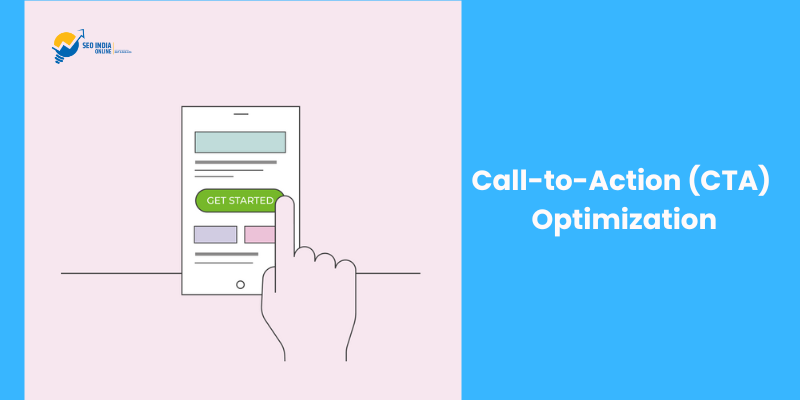
Call-to-Action (CTA) Optimization Services to Increase Clicks and Conversions

Traffic is a good thing, but actual growth starts with conversion to action. Whether you win or lose depends on how well you leverage theCall-to-Action (CTA) Optimization Services. A CTA is not merely a button, or a line of text, it is the place of turning point between interest and taking action. No matter what your objective is (sign up, sell more, receive more demo requests), each click matters.

A CTA optimization strategy is a mix of copywriting, positioning, color psychology, and A/B testing to reach the highest level of conversions. Even minor changes can be powerful when the right words and design are in place. If you’re new to this, this article will cover everything about CTA optimization and how to get started with it.

What is CTA Optimization?

Call-to-action optimization is a procedure of improving your CTA elements to urge more users to click, subscribe, or buy. It is dedicated to making CTAs more attractive, transparent, and positioning them in strategic locations to lead visitors into making the intended action. It is done through user behavioral analysis, experimenting with button colors, positions, and texts, and adapting designs by the data.

An effective CTA uses convincing texts and images, which appeal to users. Businesses can view what will work best with their audience through the assistance of A/B testing and performance monitoring. Additionally, CTA optimization will convert the random web traffic into interested leads or loyal customers by removing the hurdles and inducing immediate action.

Importance of CTA Optimization

Directly impacts conversion rates:

An optimized CTA will draw attention and encourage users to take action. It can be any action like a sign-up, buy or demand a demo. It is the last push that transforms visitors into customers. It results in better conversion performance without the need of additional traffic.

Improves user journey and experience:

Specific CTAs assist them in moving through your site or campaign without any questions of what to do now or next. This removes friction. Besides, it enhances transparency and creates a more fluid experience when browsing the site to retain users.

Reduces bounce rate and drop-offs: 

It is the case with optimized CTAs wherein the user becomes engaged and not left. They promote interactions and facilitate the reduction of bounce rate. Also, it assists in retaining visitors that are bound to conversion goals.

Enhances campaign ROI: 

Each promotional activity will become more ROI-driven when the number of users clicking and converting increases. Optimized CTAs boost the effectiveness of the campaigns and provide a better ROI.

Key Elements of an Effective CTA

  • Compelling Copy: Write commanding, action oriented words that explain to the user what to do such as Get Started, Join Free or Download Now. Combine it with benefit-based wording that emphasizes what is in it. You should say Get My Free Guide instead of submit.
  • Strategic Placement: Your CTA must be placed in a location where users are most apt to take action. Locate it on the pages where important information is provided, close to important product descriptions, or where there is high engagement. Strategic placement places the CTA within the appropriate time of intent, neither prematurely nor too late.
  • Color & Design: Visual attractiveness contributes significantly to the number of clicks. Bring out contrasting colours that will stand out of the background of your CTA button and at the same time, are similar to the palette of your brand. An eye-catching design is clean and it immediately catches the eye.
  • Size & Format: The CTA must be large enough to be noticeable but not too large to interrupt the browsing. Make it visible, interactive over devices and structured in a format easy to see and access.
  • Sense of Urgency: Build a sense of urgency by including urgency-inducing statements such as Limited Time Offer, Only a Few Left or Start Today. This is a minor psycholoValue Proposition: gical stimulus that causes users to respond more quickly rather than take time in response.
  • Be sure the users are perfectly aware of what they are getting on clicking. Focus on physical benefits, e.g. savings, access or convenience. To use an example, Save 20 Percent Now or Get Access to Exclusive Tools Instantly says there is a reward and the reward encourages the action.

Types of CTAs

Lead Generation CTAs: 

They are created to record user data and transform visitors into possible leads. They can be common in landing pages, pop-ups, or banners. These can be “Get a Free Quote, Request a Demo or Start Your Free Trial.

Sales CTAs: 

These CTAs are usually placed on the product pages or checkout screens since they are focused on making direct purchases. An example is the Buy Now or Add to Cart or Get Yours Today. They put a definite road to conversion and revenue.

Engagement CTAs: 

These are used to promote further user interaction and make the visitor read more content. They are “Learn More,” Watch Video, or Discover How It Works. Perfect to capture interest and maintain the user interest.

Form Submission CTAs: 

These make users undertake a process like registering to a newsletter or webinar. Some of them can be Sign Up, Register Now, or Join the Community of your business.

Content CTAs: 

Content CTAs are the best in terms of content marketing purposes since they make users read practical materials. They may be downloading an eBook, reading the Guide or obtaining the checklist.

Social Sharing CTAs: 

Social sharing CTAs will assist in promoting your brand to more users, making them share your content on social media. These may be Share with Friends, Tweet This or Spread the Word.

Proven Strategies for CTA Optimization

A/B Testing CTA Variations: 

The foundation of CTA optimization is regular A/B testing. Test various text, colors, designs, and placements to see which ones get the most clicks. Some minor modifications, such as replacing Get Started with Start My Free Trial, may have a tremendous effect on converting people. Constant testing helps you in knowing what exactly the audience connects with.

Personalizing CTAs Based on Audience Behavior: 

There are hardly any good performances of generic CTAs. CTAs can be more relevant and convincing through personalization which is based on user segments, behavior, or location. To illustrate, a returning visitor would be shown Welcome Back, Continue Where You Left Off whilst a new visitor would be shown the Start Exploring Now.

Using Power Words and Emotional Triggers: 

Strong CTAs use captivating words that create an element of curiosity, excitement or urgency. Adjectives such as Free, Exclusive, Instant or Limited use of words are emotional words and compel people to take action. The idea is to ensure that the CTA cannot resist the CTA without sounding pushy.

Aligning CTAs with Page Intent: 

The CTA should correlate with the purpose of the page. Have Learn More or Read the Guide with a blog that is related to awareness. Use Buy Now or Claim Your Offer on a sales page. Alignment assists users to navigate freely within the funnel.

Testing CTA Performance Across Devices: 

There is no similarity between how a desktop and a mobile user will interact with your website. The designs of the devices must be tested in terms of visibility, positioning, and size of test buttons to provide convenience and easy usability at any location.

Analyzing Click Heatmaps and Conversion Funnels: 

Use analytics tools so as to know where people are clicking most and where they are going astray. Visual patterns of engagement are viewed in the form of heatmaps to assist in establishing the best location of CTA. To make the optimum use of the CTAs, funnel analysis can be used to show which ones must be optimized the most.

Tools for CTA Optimization

Google Optimize: 

Google Optimize is an effective A/B testing tool that can assist marketers in testing various CTA versions. You can experiment with button text, color, shape and placement to find out which group produces better conversion rates. It provides evidence-based information to make smart design choices.

Hotjar / Crazy Egg: 

Platforms like Hotjar and Crazy Egg offer click heatmap, scroll maps, and user recordings to see how your visitors are engaging. They display the clicks, the scrolling, and the most attention-grabbing regions that are made by users. This visual information is used to enhance better placement of CTA, design, and visibility.

HubSpot / Optimizely: 

You can design, customize and test CTAs on both platforms, in detail. They offer ready templates, measuring performance, and audience segmentation. They give targeted CTAs depending on the behavior and preferences of the user and optimize the conversion possibilities.

Google Analytics: 

Google analytics is one of the most important tools of performance tracking that will test the effectiveness of your CTAs. It helps you to investigate conversion goals, user traffic and funnel leakage. Based on this information, you can make your CTAs more business-oriented.

Conclusion

CTA optimization is the best method of converting passive visitors into active customers. With the optimization of copy, placement, color, and design, businesses can improve their engagement. Moreover, they can decrease bouncing, and generate more conversion without increasing ad expenditures.

A/B experiments, click heat maps analysis, and matching the CTAs to the intent of users all help to ensure more efficiency. With personalization and urgency, you can encourage users to take action at the moment. Marketers can use tools such as Google Optimize, HubSpot, Hotjar, and Google Analytics to keep tracking, testing, and improving their CTAs.

If you’re new to CTA optimization, SEO India Online can assist you in case you need professional assistance making converting CTAs and improving your overall online performance. Their team is also an expert in data-driven CTA-optimization and full conversion-driven SEO tactics, which can produce actual business outcomes.

A Guide to Personal Injury Lawyer SEO

The personal injury law niche is one of the most challenging and competitive areas in the legal industry. Every law firm, big or small, is competing for visibility because the majority of potential clients begin their search online. According to recent legal marketing studies, over 78% of legal consumers research law firms online before making contact, and most of them don’t scroll past the first page of results. 

That is why word-of-mouth referrals or traditional advertising cannot be the only options for personal injury lawyers. Search engine optimization (SEO) has emerged as a major instrument for finding the right clients at the right time. In the competitive environment where firms seek to emerge as leaders, an effective SEO strategy is no longer a luxury — it is a necessity.

What is Personal Injury Lawyer SEO?

SEO or search engine optimization is the activity of improving a site so that it can be visible in the search engines, such as Google, when one types in the legal assistance search. In the case of law firms, SEO has to be specific to the legal niche, and it has to be client-centric and trust-based.

Unlike general SEO, personal injury lawyer SEO has its own challenges:

  • The niche is highly competitive, with thousands of firms targeting the same clients.
  • Clients search with urgency—after an accident, they need help quickly.
  • Trust and credibility are critical; ranking high on Google makes potential clients more likely to reach out.

Benefits for Attorneys

  • Visibility: Be the first result when clients type in the search query of personal injury lawyer near me.
  • Credibility: A well-established online presence will be an indicator of credibility and professionalism.
  • Qualified Leads: SEO assists in obtaining a client who is actively seeking a lawyer.

The reason why SEO is essential is in the case of personal injury lawyers.

Law firms can invest significantly in marketing, as personal injury cases are typically high-value cases. One of them is via paid ads, which are costly and cease to work when the budget is suspended. SEO, however, develops on a long-term basis.

Clients who search online usually enter a plea based on the urgency or location, such as:

  • “Car accident attorney Los Angeles”
  • “Fall lawyer in my area.”
  • “Best Personal injury lawyer- medical malpractice.”

Unless your firm appears in these searches, you can be certain that your competitors will. You develop your organic rankings to provide a consistent stream of leads, which is not pegged on ongoing ad spending.

Personal Injury Lawyers Keyword Research.

The foundation of any SEO plan is keyword research. It assists legal firms in knowing what potential clients are typing in Google.

Types of Keywords to Target

  • Local keywords – personal injury Chicago lawyer.
  • Keywords that are specific to the practice – truck accident attorney or medical malpractice lawyer.
  • Long-tail keywords – best slip and fall lawyer near me, or do I need a lawyer after a car accident?

Recommended Tools

  • Google Keyword Planner – Free and basic, ideal for generating ideas of keywords.
  • SEMrush / Ahrefs Advanced competition and keyword volume analysis tool.
  • Google Trends – To monitor legal search terms that are trending or by season.

Local intent, combined with practice-specific keywords, allows attorneys to get high-value leads who are willing to hire.

On-Page SEO for Personal Injury Law Firms

When you have identified your target keywords, you should optimize your website to work with these keywords.

Key On-Page Elements

  • Title Tags and Meta Descriptions – Incorporate primary keywords and make them appealing to click.
  • Headers (H1, H2, H3) – Structure the content to be readable and optimized to be found.
  • Service Pages – Specific pages on car accidents, injuries at the workplace, medical malpractice, etc.
  • Case Studies and FAQs – Be knowledgeable and respond to frequent client inquiries.
  • Internal Linking – Connecting related pages ensures the visitor is entertained and also helps search engines understand the site’s structure.
  • Schema Markup – as an Attorney – This is a structured data added to your site that allows Google to show rich snippets, like star rating and contact information.

Example: Instead of a generic headline like “Our Services,” use Experienced Car Accident and Personal Injury Lawyers in Chicago. This not only speaks to clients but also signals relevance to Google.

Local SEO for Personal Injury Lawyers

Since most clients search locally, local SEO is a powerful tool for attorneys to utilize.

Steps for Effective Local SEO

  1. Google Business Profile (GBP) – Add and update your profile name, address, phone number, and business hours. Include photos, practice details, and frequent updates.
  2. Local Citations – It is essential to ensure that your company is regularly featured on directories like Yelp, Yellow Pages, and legal-specific sites.
  3. Client Reviews – Proactively seek reviews from happy clients. Constructive criticism builds confidence and enhances ranks.
  4. Local Landing Pages – If your company operates from more than one location, create a separate page for each one (e.g., a personal injury lawyer in Dallas and a car accident lawyer in Fort Worth).

Appearing in the Google Maps 3-Pack can drive a significant volume of phone calls and leads directly to your practice.

Content Marketing for Personal Injury SEO

Content is where law firms can demonstrate authority and connect with potential clients. It also helps capture long-tail keywords.

Content Ideas for Law Firms

  • Blog Posts: “What to Do After a Car Accident,” “How to File a Personal Injury Claim,” or “Steps to Take After a Workplace Injury.”
  • Videos: Short explainer videos about common legal questions or case outcomes.
  • Case Studies: Real-world examples of how you’ve helped past clients.
  • Guides & Checklists: Free downloadable resources such as “Checklist After a Slip and Fall Accident.”
  • FAQs: Pages addressing questions like “How much does a personal injury lawyer cost?”

By consistently publishing valuable content, you position your firm as a trusted resource and enhance your search engine rankings.

Link Building Strategies for Personal Injury Law Firms

Backlinks—links from other websites to yours—are one of the most important ranking factors.

How Law Firms Can Build Links

  • Legal Directories: Avvo, FindLaw, Justia, and Super Lawyers.
  • Guest Posting: Contribute articles to industry blogs or local news websites.
  • Community Engagement: Sponsor local events, charities, or sports teams and request a backlink on their websites.
  • Partnerships: Collaborate with local businesses, doctors, or hospitals for mutual visibility.

High-quality links not only improve rankings but also bring referral traffic and brand recognition.

Technical SEO for Personal Injury Websites

Even the best content won’t rank if your site has technical issues.

Key Technical Considerations

  • Mobile-Friendly Design: Since most clients search from smartphones, your site must look and function well on smaller screens.
  • Page Speed: Slow-loading sites drive visitors away.
  • Secure Site (HTTPS): Security builds trust and is a ranking factor.
  • Fix Crawl Errors: Ensure search engines can properly index your site.
  • Clear Site Structure: Organize practice areas, attorney profiles, and resources in a logical manner.

A user-friendly, technically optimized website creates a better experience for both visitors and Google.

Measuring SEO Success for Personal Injury Lawyers

Results, not just rankings, should always be the measure of SEO.

Key Metrics to Track

  • Keyword Rankings – Are You Showing Up for Your Target Terms?
  • Organic Traffic – How many people are visiting from Google?
  • Leads & Conversions – Calls, form submissions, and consultations booked.
  • Return on Investment (ROI) – How much revenue comes from organic leads?

Tools to Use

  • Google Analytics – Track traffic and conversions.
  • Google Search Console – Monitor search performance and indexing.
  • Call Tracking Software – Attribute leads to SEO efforts.

Law firms should also set realistic expectations. SEO is a long-term investment that typically yields strong results within 6 to 12 months.

Common SEO Mistakes Lawyers Make

Many attorneys miss out on opportunities because of common missteps:

  • Overusing legal jargon – Clients search using simple language, not technical terms.
  • Neglecting Local SEO – Failing to optimize the Google Business Profile means missing out on local clients.
  • Not Updating Content – Old, outdated blogs or pages can hurt rankings.
  • Depending Only on Paid Ads – PPC ads are expensive and stop generating leads when paused.

Avoiding these mistakes ensures your SEO efforts actually pay off.

Hiring an SEO Agency for Personal Injury Lawyers

SEO can be complex and time-consuming, especially in a competitive niche like personal injury law. Many firms choose to work with an SEO agency for better results.

What to Look for in an Agency

  • Experience in Legal SEO – Proven track record with law firms.
  • Transparency – Clear reporting and communication.
  • Custom Strategies – Tailored plans instead of one-size-fits-all solutions.
  • Case Studies & Reviews – Evidence of success with similar clients.

Questions to Ask Before Hiring

  • How do you measure SEO success?
  • Can you share results from other law firms you’ve worked with?
  • What is your approach to local SEO and content marketing?

By outsourcing SEO, lawyers can focus on serving their clients while professionals handle the online growth.

Conclusion

SEO can no longer be an option for law firms dealing with personal injury; it is a must in the modern, competitive digital environment. As the majority of clients are resorting to search engines to get legal assistance, it is the company that focuses on SEO that will remain visible, gain credibility, and attract new leads regularly. Unlike paid advertising, where services stop delivering results when the budget runs dry, SEO services provide a strong foundation through which long-term growth can be achieved.

Investing in the right strategy, personal injury lawyers can guarantee a steady stream of qualified clients, enhance their reputation, and differentiate themselves in a saturated market.

Partner with SEO India Online to boost your visibility and generate qualified leads through proven SEO strategies for personal injury lawyers.

SEO India Online Typically replies within an hour
👋 Hi! Want to know more about SEO India Online or get a free AI SEO audit? Ask us anything, or start a chat with our team on WhatsApp.
Start on WhatsApp
Limited time

Free AI SEO Audit

Claim your free audit of Google & AI platform visibility before this offer window closes.

20Min
00Sec
Claim My Free Audit