
Home > Blog > How to Measure AI SEO Results: Visibility, Citations, Traffic and Leads
How to Measure AI SEO Results: Visibility, Citations, Traffic and Leads
Search no longer starts and ends on a
 Rajive Rana
Founder & Head of Search, SEO India Online
·
23 Oct 2026
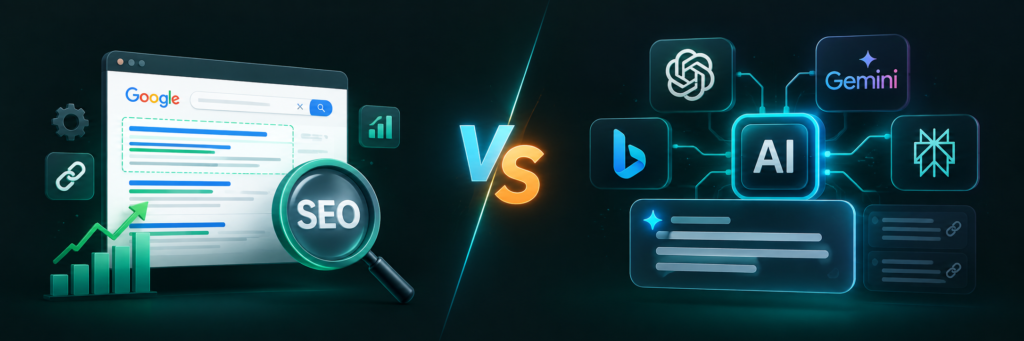
Search no longer starts and ends on a page of ten blue links. People now type a question into Google and get an AI Overview, or they skip the search bar entirely and ask ChatGPT, Gemini, Perplexity or Microsoft Copilot. That shift creates a real measurement problem. Keyword rankings and organic sessions still matter, but they can’t tell you whether your brand appears inside the answer itself.
To measure AI SEO results properly, you need to track brand visibility, citations in AI-generated answers, referral traffic, qualified leads and conversions together. A mention on its own proves very little. What counts is how often you appear in AI answers and whether that visibility brings in the right visitors and real business.
What Is AI SEO Measurement?
AI SEO measurement is the process of tracking how visible a website is across AI-powered search experiences and answer engines, and what that visibility is worth to the business. Traditional SEO measurement asks where a page ranks and how many clicks it earns. AI SEO measurement asks a different set of questions. Is your brand mentioned when someone asks an AI tool about your services? Is your website cited or linked as a source? Do people arrive on your site from those answers, and do they stay, engage and become leads? And does any of it finally show up in conversions and revenue? Here is how the two approaches compare.
| Measurement Area | Traditional SEO | AI SEO |
|---|---|---|
| Visibility | Organic rankings and impressions | Brand mentions and presence in AI answers |
| Content Discovery | Search results and indexed pages | AI answers and referenced sources |
| Traffic | Organic search sessions | AI referral sessions and assisted discovery |
| Engagement | Organic visitor behavior | Engagement from AI-referred visitors |
| Conversions | Organic leads and sales | Leads and sales attributable to AI search |
| Performance | Rankings, traffic and conversions | Visibility, citations, traffic and business outcomes |
Traditional SEO metrics haven’t lost their value. Strong organic visibility often supports AI visibility, because many AI systems draw on content that is already well indexed and trusted in search. Think of AI SEO measurement as an extra layer on top of your existing reporting, not a replacement for it.
What Are the Key Metrics to Measure AI SEO Results?
The clearest way to measure AI SEO results is to group your metrics into four core areas: visibility, citations, traffic and leads. Each one answers a different question, and together they show the full journey from being seen in an AI answer to winning a customer. We also add supporting engagement, content quality and revenue metrics, because they help explain why the numbers move in the first place.
1. AI Search Visibility
AI search visibility shows how often your brand appears in AI-generated answers for the topics, questions and prompts that matter to your business. The core numbers here are how frequently your brand is mentioned, what percentage of your tracked prompts include it, and your share of visibility compared with competitors. It also helps to break results down by platform, since your presence in ChatGPT can look very different from your presence in Google AI Overviews, Gemini, Perplexity or Copilot. Finally, check coverage across your main topics, services and product categories.
2. AI Citations and Source Visibility
Citations go one step further than mentions. They show when an AI platform uses your website as a source or links directly to your content. Track the total number of citations, the specific URLs being cited and how many unique pages earn them. Then look at citation frequency across your tracked prompts, your citation share against competitors, and whether the cited pages actually relate to the services you want to be known for. Watching these numbers over time shows whether your authority is growing. Keep the distinction clear, though.
3. AI-Driven Website Traffic
This group of metrics looks at the visitors who actually reach your site from AI platforms, and how good that traffic is. Start with the sessions and users referred by each AI tool, then see which landing pages receive them. From there, review engagement rate, engaged sessions, pages per session and average engagement time. Splitting new and returning visitors shows whether AI answers are introducing you to fresh audiences. Track growth month by month as well. Bear in mind that a lot of AI-assisted discovery leaves no referral trail. Many people read an answer, then search your brand name separately or type your web address straight into the browser.
4. Leads, Conversions, and Revenue
This is where AI SEO proves its worth. Track contact form submissions, demo requests, consultation bookings, phone calls and qualified inquiries. For ecommerce sites, add purchases and revenue. Calculate the conversion rate of identifiable AI referral sessions, and work out cost per lead where campaign costs can be fairly allocated. Assisted conversions matter too, because AI often plays an early role before someone converts through another channel, so look at its contribution to the sales pipeline. Treat visibility and citations as leading indicators. They suggest things are heading in the right direction.
5. Supporting Metrics: Content Quality and Search Coverage
Supporting metrics explain why your performance goes up or down. The basics come first. Search engines and AI crawlers need to reach and index your key pages, and your content should answer the questions your audience asks. Your brand details also need to match across your website, profiles and directory listings. Once those are in place, check for relevant backlinks and brand mentions, structured data that has been added and tested, and content that stays fresh and on topic. Treat these as early warning signs, nothing more. Even a well-built page with good backlinks may never get cited.
How to Measure AI Search Visibility Across Different Platforms
Each AI platform builds its answers in its own way. Some lean heavily on live web results, some cite sources openly, and others show links only occasionally. The reporting data each one makes available also varies a great deal. That is why AI visibility needs platform-specific tracking rather than one blended number. Here is how we approach each of the major platforms.
1. Google AI Overviews
Begin by identifying which of your target queries actually trigger an AI Overview. For those queries, record whether your brand or your pages appear among the cited sources. Next, monitor query-level organic visibility and the traffic tied to it in Google Search Console. Comparing changes in AI Overview presence with shifts in clicks and impressions can reveal whether an overview is drawing attention toward your page or answering the question before anyone clicks. One limitation is worth knowing. Google does not always provide AI Overview exposure as a separate, complete reporting metric, so manual checks or third-party tools usually fill the gap.
2. ChatGPT
ChatGPT measurement starts with a fixed list of prompts relevant to your business. Run them on a regular schedule and note whether your brand is mentioned in each answer. When ChatGPT shows linked sources, record which of your pages appear and which competitors sit alongside you. Over time, patterns emerge. You will see which topics and customer questions bring your brand into the conversation and which leave you out entirely. Then check Google Analytics 4 for identifiable referral traffic from ChatGPT, so you can see whether that visibility is producing actual visits.
3. Google Gemini
Gemini needs the same disciplined approach. Monitor brand mentions and source links across your core prompts, and record which topics and pages are tied to your visibility. Consistency matters a lot here. Run the same prompts, in the same way, under conditions that are as similar as possible each time, because small changes in wording, location or account settings can change the answer. When you compare results over time using the same setup, you can separate genuine progress from normal day-to-day variation. You can also spot the moment a competitor starts taking space you used to hold.
4. Perplexity AI
Perplexity tends to show its sources clearly, which makes it one of the easier platforms to track. Record brand mentions and every cited source for your tracked prompts. Pay close attention to which of your pages are referenced again and again, because those pages are doing something right and can guide future content. Review whether each citation is relevant to the topic, and note which competitors appear in the same answers. Then check GA4 for identifiable referral sessions from Perplexity to see how often those citations turn into actual visits to your site.
5. Microsoft Copilot
Copilot often sits inside tools people already use at work, such as the Edge browser and Microsoft 365, which makes it especially relevant for B2B brands. Check whether your brand appears for relevant prompts and whether your pages are referenced as sources. Track identifiable referral traffic in GA4 where it is available. Then compare your performance across your key topics and against the competitors who matter most to you. Even a small set of well-chosen prompts, checked regularly, can show whether Copilot users are likely to discover you.
| Platform | Primary Metrics | Supporting Data Source |
|---|---|---|
| Google AI Overviews | Query visibility, cited sources, organic traffic | Google Search Console and manual checks |
| ChatGPT | Brand mentions, linked sources, referral traffic | Prompt tracking and GA4 |
| Gemini | Brand mentions, source visibility, referral traffic | Prompt tracking and GA4 |
| Perplexity | Citations, cited pages, referral traffic | Prompt tracking and GA4 |
| Copilot | Brand mentions, source visibility, referral traffic | Prompt tracking and GA4 |
Platform reporting changes often, so some of these metrics may need manual checks or a third-party tracking tool to stay accurate.
How to Track AI Citations and Brand Mentions
Tracking citations works best as a repeatable process, not an occasional spot check. Start by building a prompt list from your target keywords, services, products and the real questions customers ask your sales team. Run those prompts across your chosen AI platforms using the same method every time.
For each answer, record brand mentions, source links, cited URLs and any competitors that appear. Then classify each result as a linked mention, an unlinked mention or a direct source citation, and judge whether the citation supports the topic or offer you actually care about. Repeat the cycle at regular intervals and changes become easy to spot. The formulas below turn that raw data into numbers you can compare from month to month.
| Metric | How to Measure It |
|---|---|
| Brand Mention Rate | Prompts mentioning the brand ÷ total prompts tested × 100 |
| Citation Rate | Prompts citing the website ÷ total prompts tested × 100 |
| Unique Cited Pages | Count of distinct website URLs referenced |
| Citation Share | Brand citations ÷ total relevant citations tracked × 100 |
| Competitor Mention Rate | Prompts mentioning a competitor ÷ total prompts tested × 100 |
Use one consistent definition and one stable prompt set. Different tools calculate AI visibility and citation share in different ways, so never compare figures from two tools without first checking how each one works them out. A 30% share in one platform and a 30% share in another may not mean the same thing at all.
How to Measure AI-Driven Traffic in Google Analytics 4
Google Analytics 4 is the most practical place to see what happens after someone clicks through from an AI platform. The goal has two parts. First, identify those visits accurately. Second, judge whether they are worth anything to the business. Here is how we set it up.
1. Identify AI Referral Sources
Open the Traffic acquisition report in GA4 and set the primary dimension to session source/medium. Then look for referral sources linked to AI platforms. Common ones to check include chatgpt.com, perplexity.ai, gemini.google.com and copilot.microsoft.com. Treat these as a starting point rather than a complete list. Source names change, new AI tools appear, and some platforms pass referral details differently or not at all. Review your referral list every month or so and add any new AI sources you find, so your reporting doesn’t quietly miss a growing channel.
2. Build an AI Traffic Reporting View
Once you know the sources, bring them together in one place. A useful AI traffic view tracks session source and medium, sessions and active users, landing pages, engagement rate, key events and conversions, plus revenue where it applies. The cleanest approach is a custom channel group in GA4 with an “AI Referral” channel built on a regex rule that matches your AI sources. Place that channel above the default Referral channel, because GA4 applies channel rules in order and would otherwise file these visits under Referral.
3. Measure Traffic Quality
Volume alone can mislead you. Compare AI-referred visitors with your other acquisition channels, such as organic search, paid search and direct. Then ask practical questions. Do these visitors reach your service pages? Do they read supporting content? Are they submitting forms, requesting demos or completing purchases? AI referrals are often small in number but arrive better informed, because the answer they read has already done some of the explaining. Your own data will tell you whether that holds true for your site.
| Metric | What It Tells You |
|---|---|
| AI Referral Sessions | Volume of identifiable AI-referred visits |
| Engagement Rate | Percentage of sessions meeting GA4 engagement criteria |
| Landing Page Performance | Which pages attract AI-referred visitors |
| Conversion Rate | Percentage of eligible AI-referred sessions or users completing a defined conversion |
| Qualified Leads | Number of relevant inquiries from identifiable AI traffic |
| Revenue | Sales value attributed to identifiable AI-referred visits |
Keep one limitation in mind. GA4 captures identifiable website activity. It cannot record every visit or decision influenced by an AI answer, especially when referral details are stripped or the visitor returns later through another route.
How to Measure AI SEO Leads and Conversions
Visibility and traffic are encouraging, but on their own they don’t pay the bills. To measure AI SEO results that leadership will take seriously, you need to connect AI activity to inquiries, sales and revenue. This is the step that moves your reporting from attention to value. Let’s understand this in detail.
1. Define Meaningful Conversions
Before you count anything, decide what a conversion actually means for your business. That sounds obvious, yet it’s where a lot of AI reporting goes wrong. A B2B software firm should care about demo requests and qualified sales opportunities. A local dental clinic or law practice cares about booked appointments, calls and quote requests. An online store? Purchases and order value, plain and simple. Be strict here. Scroll depth and video plays are handy when you’re diagnosing a page, but if you count them as conversions, AI traffic will look much more valuable than it is.
2. Connect AI Traffic With Conversion Data
Knowing that AI visitors converted is only half the story. You also want to know what those conversions turned into. GA4 key events tell you which sessions ended in a form fill or a purchase. Your CRM, call tracking and ecommerce data tell you whether that lead became a paying client. Look at the pages AI visitors land on and the paths they follow, and keep the AI channel separate in your source and medium reports. From there, check lead quality and how far each lead gets in the pipeline. If your setup allows it, compare first-touch with last-touch attribution too.
3. Measure AI SEO Conversion Rate
The formula itself is simple. Conversion Rate = (Conversions ÷ Eligible Sessions) × 100
The important part is the denominator. Define it once and stick to it. If you want the conversion rate of identifiable AI-referred traffic, use AI referral sessions as your eligible sessions. For example, 18 conversions from 600 AI referral sessions gives you a 3% conversion rate. Mixing in organic or direct sessions would blur the picture, and changing the definition between months would make your trend line unreliable.
4. Measure AI SEO ROI
A practical way to evaluate return on investment looks like this. ROI = (Attributed Revenue − AI SEO Cost) ÷ AI SEO Cost × 100. Say AI-referred visits generated $12,000 in attributed revenue and your AI SEO work cost $4,000. Your ROI would be 200%. The math is easy. The hard part is honesty. This calculation only means something when revenue attribution and costs are defined consistently. Where AI influence can’t be reliably isolated, report attributable revenue separately from estimated or assisted contribution. Blending the two may produce a more impressive number, but it won’t survive a close look from your finance team. If you are comparing AI SEO packages, ask each provider how its reporting ties deliverables to leads and revenue, not just visibility.
Best Tools to Measure AI SEO Performance
No single tool gives you a complete view of AI visibility, citations, traffic and leads. You get the clearest picture by combining a few of the best SEO tools, each doing the job it does best.
| Tool | Primary Use |
|---|---|
| Google Search Console | Organic search impressions, clicks, queries and page performance |
| Google Analytics 4 | Referral traffic, engagement, key events and conversions |
| Semrush | SEO visibility, keyword performance, competitor research and relevant AI visibility features |
| Ahrefs | Organic search research, backlinks and competitor analysis |
| Screaming Frog | Crawling, indexability checks and technical SEO diagnostics |
| CRM and Lead Tracking Tools | Lead quality, sales opportunities and revenue tracking |
| AI Visibility Tracking Platforms | Prompt-level brand mentions, citations and competitor visibility |
Google Search Console shows real impressions, clicks and queries from Google, and its data includes searches where AI features appear, though it doesn’t report them separately. GA4 handles referral traffic, engagement and conversions. Semrush and Ahrefs support keyword, backlink and competitor research, and both now offer some AI visibility features depending on the plan.
Screaming Frog checks crawlability and technical health. Your CRM leads to revenue, while dedicated AI visibility platforms track prompt-level mentions and citations. Keep one distinction in mind. Search Console and GA4 report directly observed data, while visibility scores from third-party tools are estimates built on their own prompt samples. AI tracking capabilities also depend on the tool and subscription you pick, so check before you buy.
How to Build an AI SEO Performance Dashboard
A good dashboard turns scattered data into a story you can read in five minutes. Its job is to connect AI visibility with business outcomes, so anyone on the team can see whether being mentioned is turning into being chosen. We recommend organizing it into these sections.
| Dashboard Section | KPIs to Include |
|---|---|
| AI Visibility | Mention rate, visibility share, platform coverage |
| Citations | Total citations, unique cited pages, citation rate |
| Website Traffic | AI referral sessions, users, landing pages |
| Engagement | Engagement rate, engaged sessions, returning visitors |
| Leads | Inquiries, qualified leads, demo requests |
| Conversions | Conversion rate, purchases, completed key events |
| Business Impact | Attributed revenue, cost per lead, estimated ROI |
| Competitor Comparison | Mention share, citation share, topic coverage |
Looker Studio makes it easy to pull GA4 and Search Console data into one view, with prompt-tracking results added from a spreadsheet. Review the dashboard monthly and compare results against a documented baseline recorded before any optimization work begins. Use the same prompts, platforms, conversion definitions and reporting periods every time. Without that consistency, your trends are just noise.
How Often Should You Measure AI SEO Results?
Different metrics move at different speeds, so they need different review cycles. AI answers can change from one week to the next, while traffic, leads and revenue need longer to form a meaningful pattern.
| Frequency | What to Review |
|---|---|
| Weekly | Selected prompt checks, notable citation changes, technical issues |
| Monthly | AI visibility trends, citation coverage, referral traffic, engagement, leads |
| Quarterly | Competitor comparisons, content strategy, conversion contribution, ROI |
Prompt-level results can swing because of personalization, location, model updates and small changes in how a question is worded. The same prompt may even produce a different answer an hour later. So never treat a single check as proof that things have improved or declined. Look for patterns that hold across several checks and reporting periods before you change strategy. One good week is encouraging. Three good months is evidence.
How to Improve AI SEO Results Based on Measurement Data
If AI Visibility Is Low
Find the gaps in your topic and question coverage first. Then make your content more relevant and your answers clearer, ideally with a direct answer near the top of each page. Strengthen topical authority by covering related questions in depth, and see our guide on how to improve your brand visibility in AI search results for a fuller walkthrough.
If Citations Are Low
Review the pages that target your most important questions. Are they genuinely useful, accurate and well organized? Improve factual accuracy, support claims with credible data, and use clear headings that make answers easy to pull out. If you would rather have specialists handle this, our generative engine optimization services focus on making your content easier for AI platforms to find, understand and cite.
If AI Traffic Is Low
Find which platforms and pages already send identifiable referrals, and learn from what they have in common. Align more of your content with the questions your audience actually asks. Before changing anything else, check your referral tracking and analytics setup. Sometimes the traffic is there and simply being misclassified.
If Leads Are Low
Look closely at the landing pages AI visitors arrive on. Is the call to action relevant to what they just read? Review forms, conversion paths and page experience for friction. Then ask a harder question. Are AI-referred visitors actually your target audience, or are you being cited for the wrong topics?
Throughout all of this, base decisions on patterns you can actually observe. No single factor controls AI visibility, so be wary of any fix that promises to.
Frequently Asked Questions About Measuring AI SEO Results
How do you measure AI SEO results?
You measure AI SEO results by tracking four core important areas: visibility in AI-generated answers, citations of your website as a source, referral traffic from AI platforms, and the leads that traffic produces. Then add engagement, conversion and revenue data to understand the business impact. Use a consistent prompt set and reporting period so results stay comparable over time.
What are the most important AI SEO metrics?
The most important AI SEO metrics are brand mention rate, citation rate, unique cited pages, AI referral sessions, qualified leads, conversion rate and attributable revenue. The first three show how visible and trusted your brand is inside AI answers. The last four show whether that visibility brings in real visitors and real business. You need both sides for a complete picture.
How can I check whether ChatGPT mentions my website?
To check whether ChatGPT mentions your website, build a list of prompts based on your services and your customers’ real questions. Run them in ChatGPT, then record whether your brand appears, which source links are shown and which competitors are named. Repeat the same prompts on a regular schedule, using the same method each time, so you can spot genuine changes.
Can Google Analytics 4 track AI search traffic?
Yes, Google Analytics 4 can track AI search traffic, as long as the AI platform passes referral data along with the visit. When it does, you’ll spot sources like ChatGPT or Perplexity in your acquisition reports, and you can group them into their own custom channel. What GA4 can’t see is the person who read an AI answer, closed the tab and searched for your brand later. That visit shows up as organic or direct instead.
How do I measure AI search citations?
Pick a fixed group of prompts that matter to your business and run them across the AI platforms you care about. Each time, note any link or source that points back to your website. After a few rounds, you can measure AI search citations properly: how often you’re cited, how many different pages earn those citations, and what share of your prompts reference your site at all. Then line those numbers up against your competitors.
How long does it take to see AI SEO results?
Honestly, it varies a lot. A site with solid authority and well-built content might pick up its first citations within a few weeks. A newer site in a crowded niche could wait months. The topic and the platforms you target play a part too. So instead of chasing a deadline, record where you stand before you begin, then follow how things move across several reporting periods as your AI SEO results take shape. A single check proves nothing.
What is the difference between AI SEO visibility and AI SEO traffic?
AI SEO visibility measures how often your brand appears in AI-generated answers, whether or not anyone clicks. AI SEO traffic measures the identifiable visits that actually reach your website from AI platforms. A brand can enjoy strong visibility with little traffic when answers fully satisfy users, so tracking both helps you understand the true value of your presence.
How can I measure the ROI of AI SEO?
Visibility is about being seen. It tracks how often your brand shows up inside AI-generated answers, even when nobody clicks. Traffic is about being visited. It counts the people who actually land on your site from an AI platform, or at least the ones GA4 can identify. The two don’t always move together. If an answer fully solves someone’s question, you get the visibility without the visit, which is why AI SEO visibility and AI SEO traffic need to be tracked separately.
Conclusion: Measure AI SEO Beyond Visibility
Getting mentioned by an AI tool feels like a win, and sometimes it is. But a mention is only the first step. Real AI SEO measurement connects visibility and citations to the traffic, leads and revenue they produce, tracked consistently across every platform your audience uses. Mentions and citations show that you can be discovered. Qualified leads and revenue show that being discovered is worth something. Start with a clear baseline, build a simple dashboard and let the data shape your next round of content and conversion improvements.
Not sure how your brand shows up in AI answers today? SEO India Online’s AI SEO services in India start with a review of your AI search visibility, citation coverage and traffic attribution, then show you where the biggest opportunities for growth are hiding.

Rajive Rana
Rajive has spent 18 years building search programmes for brands across India, the UK and the US — from local service businesses to enterprise ecommerce. He writes about the parts of SEO that survive algorithm cycles, and leads the AI visibility practice at SEO India Online.
Connect on LinkedIn