
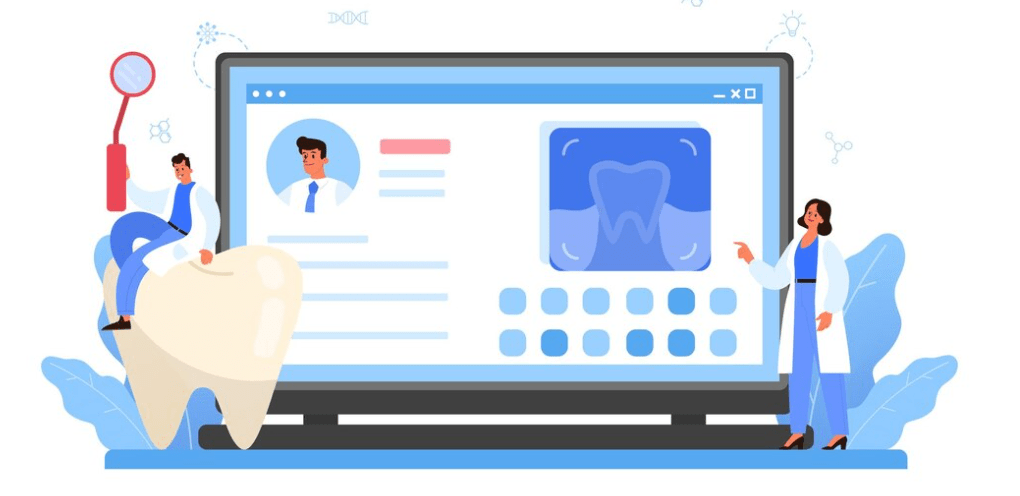

Any business, including a dental practice, must have an online presence in today’s digital world. With people increasingly turning to the internet, and now to AI tools, to discover healthcare services, dentists who want to increase their reach and connect with a larger audience must have a strong online strategy. This is where SEO for dentists enters the picture.
SEO India Online’s objective is to assist dentists in harnessing the power of SEO to attract and retain more patients. This guide walks you through the customized SEO techniques that can transform the online exposure of your dental practice, bringing you closer to the patients who need your expertise.
From optimizing your website for local search to creating engaging content, we’ll explore the tactics that can set your dental practice apart. Let’s dive into SEO for dental offices and unlock the potential to grow your patient base.
What is SEO for Dentists?
Dental SEO, or dental search engine optimization, is a specialized digital marketing technique used to increase a dental practice’s online presence. It involves optimizing a dentist’s website and online profiles to appear higher on search engine results pages and in AI-generated answers, particularly for local queries. Local SEO for dentists focuses on keywords linked to dentistry, creating useful content, improving website performance, and managing online reviews. This strategy helps to attract more potential patients, improve website traffic, and eventually build the patient base of a dental practice. It makes it easier for people who need dental services to find and contact the practice online.
The Importance of SEO for Dental Offices
SEO is crucial for dental offices because it ensures potential patients can easily find and engage with their services online. Its importance lies in attracting, engaging and retaining patients seeking dental care. In the following points, we explore how SEO for dentists empowers dental practices to enhance their online presence, connect with a broader audience, and ultimately grow their patient base.
Enhanced Local Awareness
One of the key benefits of SEO for dental practices is increased local awareness. Dentists can target potential patients in their immediate region using location-based optimization tactics, increasing foot traffic to the practice. Local SEO strategies like optimizing your Google Business Profile help dental clinics stand out in local search results. Patients choose local healthcare providers for convenience, so visibility builds confidence and trustworthiness.
Drive Relevant Traffic
SEO for dental offices goes beyond just increasing website visitors; it’s about driving relevant traffic. By targeting specific keywords related to dental services and treatments, your website becomes more visible to individuals seeking dental care. This precision means the traffic you attract is more likely to convert into actual patients, increasing the return on your marketing investment. SEO allows you to align your online presence with the specific needs of your target audience, enhancing the quality of your website traffic and, ultimately, your patient roster.
Improved Competitive Advantage
SEO is a game changer in the competitive environment of dental practices. It distinguishes your practice by earning higher search visibility. When potential patients look for dental services, a well-optimized website places you among the top results, making you a preferred option. This advantage not only increases clicks but also builds trust. A solid online presence shows knowledge and dependability, setting you apart in people’s minds and positioning your dental practice as the go-to choice in the local market.
Building Trust and Credibility with Patients
Trust and credibility are vital for dental practices, and SEO plays a significant role in establishing them. When your website ranks high in search results, patients perceive it as more trustworthy and reliable. Because health information is held to a higher standard, Google looks closely at experience, expertise, authoritativeness and trust (E-E-A-T) for dental content, so dentist-written or dentist-reviewed pages help both rankings and patient confidence. Informative content and positive online reviews also create a sense of authority and competence. This fosters confidence among potential patients, making them more likely to choose your practice. SEO doesn’t just boost visibility; it cultivates a reputation that encourages patient trust and loyalty, crucial factors for the long-term success of any dental office.
How to Optimize a Dental Website for SEO?
SEO for a dental website is a deliberate process that can substantially influence a practice’s online exposure and patient acquisition. In the following sections, we review the actions and strategies that help your dental website rank better in search engine results, making it more accessible to potential patients looking for dental services. To optimize your dental website for SEO, consider the following:
Choose a Reliable, SEO-Friendly Platform like WordPress
The foundation of any effective dental website SEO strategy begins with selecting a dependable platform. WordPress is popular and versatile thanks to its user-friendly interface and wealth of SEO-friendly plugins. It provides the flexibility to optimize content, meta tags and URLs, making it easier to implement essential SEO techniques. Whatever platform you choose, make sure it loads fast, lets you edit titles, headings and schema, and is easy to keep updated and secure. Our web design services can help you build on a strong base.
Design an Attractive Dental Website
A visually appealing dental website is essential to captivate visitors and retain their interest. A clean, professional and user-friendly design instils trust in potential patients. Use high-quality images that reflect your practice’s identity, such as real photos of your team and clinic rather than generic stock images. Prioritize responsive design for mobile compatibility, and ensure intuitive navigation so users can find information easily and book an appointment in a few taps. An attractive website enhances the user experience and encourages visitors to stay, explore and contact you.
Mobile-Friendly Website
In an era where mobile devices dominate online access, a mobile-friendly dental website is paramount. A responsive design ensures that your site adapts seamlessly to different screen sizes and devices, providing an optimal user experience. This caters to your mobile audience and aligns with how Google works, since Google predominantly uses the mobile version of your site for indexing and ranking. Add tap-to-call buttons and make sure your content on mobile matches your desktop pages.
Heading Tags Optimization
Heading tags, including H1, H2 and H3, are crucial for structuring your dental website’s content. They improve readability and help search engines and AI tools understand your page. The H1 tag should convey the page’s primary topic, while H2 and H3 tags divide content into subsections, making it easier for users and search engines to follow your content hierarchy. Properly optimized heading tags enhance the user experience and signal the importance of specific content, supporting your SEO performance.
Generate Helpful Content Based on Targeted Keywords
Creating informative content that aligns with targeted keywords is the cornerstone of effective dental website SEO. By addressing common patient questions, dental concerns and relevant topics, you position yourself as an authority in the field and increase your chances of ranking well. Follow Google’s guidance on creating helpful, reliable, people-first content, write in plain language patients understand, and have a dentist review every medical statement. High-quality content enhances user engagement and encourages longer website visits. It is a proactive way to meet patient needs while boosting your dental practice’s online visibility. Our content marketing strategy guide shows how to plan it.
Website Content Optimization
Optimizing your dental website’s content is essential for SEO. It means using relevant keywords naturally, and writing clear title tags, meta descriptions and image alt text throughout your pages. This helps your website appear for the right queries and improves the experience by providing valuable information. Well-optimized content is engaging, informative and easy to navigate. Avoid repeating keywords unnaturally, which Google treats as keyword stuffing. Create separate pages for each treatment, such as dental implants, Invisalign, root canal and teeth whitening, and answer the questions patients ask about cost, pain, recovery and aftercare.
Improve User Experience (Speed, Accessibility, Navigation and More)
Enhancing user experience is critical to dental website SEO. Factors like website speed, accessibility for all users and intuitive navigation are pivotal. Google measures page experience through the Core Web Vitals, so aim for LCP under 2.5 seconds, INP of 200 milliseconds or less, and CLS of 0.1 or less. A fast-loading site keeps users engaged and supports your rankings. Making your site accessible, for example with readable text, strong colour contrast and alt text, opens your content to a wider audience. Easy navigation simplifies finding information, and clear calls to action, such as “Book an Appointment,” combine to create a seamless, user-friendly experience.
Technical SEO Analysis & Optimization
Technical SEO is the backbone of a well-optimized dental website. It involves analysing and optimizing behind-the-scenes elements such as site structure, meta tags, XML sitemaps, HTTPS and schema markup. Adding LocalBusiness structured data (for example, the Dentist type) helps search engines understand your practice’s name, address, hours and services. Addressing technical issues ensures search engines can crawl and index your site effectively, leading to improved rankings. By rectifying technical problems, your dental website becomes more search-engine-friendly and user-friendly, enhancing visibility, traffic and the overall success of your online presence.
Strong Internal Linking Strategy
A robust internal linking strategy is crucial to dental website SEO. It involves connecting related pages on your website through hyperlinks, improving user navigation and search engine crawlability. By guiding visitors to other relevant content, such as linking your blog post on dental implants to your implant service page, you encourage longer visits and increase the chances of conversions. Effective internal linking also helps distribute link equity across your site, which can strengthen the ranking potential of important pages. This strategic approach improves user experience and elevates your dental practice’s online visibility.
Build Quality Backlinks
Building quality backlinks is fundamental to dental website SEO. Backlinks, or links from external websites to yours, endorse your site’s credibility and authority. A strong backlink profile can significantly boost your search engine rankings. However, it is crucial to prioritize quality over quantity. Links from reputable, relevant sources, such as local news outlets, dental associations, schools and community organizations, hold more value. Build these connections through guest articles, content partnerships, sponsorships or outreach. Avoid buying links or joining link schemes, which go against Google’s link spam policy.
Set Up Your Google Business Profile & Optimize It
Setting up and optimizing your Google Business Profile (formerly Google My Business) is integral to dental SEO. A well-managed profile enhances your online visibility and ensures that vital practice information, such as your location, hours and contact details, is readily available to potential patients. Choose “Dentist” as your primary category, add your other services as secondary categories, and use your real business name without added keywords. Optimizing the profile also involves adding high-quality photos, regularly updating posts, listing your services and encouraging patient reviews. Google uses your business information to understand and show your practice. A strong profile fosters trust, attracts local search traffic and helps more patients find and choose your services.
Collect Reviews from Happy Patients
Collecting reviews from satisfied patients is a powerful SEO strategy for dental websites. Positive patient feedback enhances your online reputation and visibility in local search results. Encourage patients to leave reviews on platforms like Google, Yelp and Healthgrades, which can significantly impact your practice’s credibility and trustworthiness. Reply to every review professionally, and never confirm a person is a patient or discuss their treatment in a public reply, to respect patient privacy. Do not offer discounts or gifts in exchange for reviews, since Google’s guidelines prohibit fake and undisclosed incentivized reviews. Reviews matter more than ever, because AI tools use them too: BrightLocal’s 2026 survey found that use of AI tools for local business recommendations rose from 6% to 45% in a year.
Join Reputable Dental Communities and Forums
Participating in reputable dental communities and forums is a strategic approach to building your online authority. These communities let you showcase your expertise, connect with peers and address patient concerns. By contributing valuable insights, you establish yourself as an authority in the field and build brand awareness that can lead to patient enquiries and natural mentions. Do not post links purely to improve rankings: forum links are usually nofollow, and Google lists forum comments with optimized links in the post or signature as link spam. Focus on being genuinely helpful, and never share patient details.
Improve Your Presence on Social Media
Elevating your social media presence supports your dental SEO. Active, engaging profiles on platforms such as Facebook, Instagram, X, YouTube and LinkedIn can drive traffic to your website and increase your brand visibility. Social signals are not a direct ranking factor, but sharing informative content, short videos, patient education and updates about your practice builds trust, earns mentions and brings more people to search for your practice by name. Always get written consent before sharing patient photos or testimonials, and follow your dental board’s advertising rules.
Integrate a Blog Section
Integrating a blog section into your dental website is a savvy SEO move. It gives you a platform to regularly publish informative, keyword-optimized content, showcasing your expertise and addressing patient concerns. Blogs enhance your site’s authority and keep your website fresh and engaging. They offer opportunities for internal linking and attract a loyal readership. Show the author and the date each post was last reviewed. By consistently sharing valuable insights and advice, you inform and engage patients and strengthen your website’s position in search results and AI answers.
How Much Does Dental SEO Cost?
The cost of dental SEO can vary greatly based on several factors. It is critical to recognize that SEO is a continuous process, not a one-time cost. The cost is usually determined by the competitiveness of your local market, the size of your website and the services you need.
For a smaller dental practice in a less competitive area, a monthly SEO service might range from about $500 to $1,500. The cost can be substantially higher in larger cities or more competitive markets, often exceeding $2,500 per month.
Investing in expert SEO services is a crucial part of expanding your online visibility and patient base. While the expense may appear substantial, the benefits of greater visibility, patient enquiries and practice growth can far exceed the initial outlay. Finding an SEO company that can tailor its services to your needs and budget is critical to achieving a strong return on investment. Be cautious of anyone who guarantees rankings. You can view our SEO packages and pricing on our website.
What is Local SEO for Dentists?
Local SEO for dentists is a specialized digital marketing approach designed to improve a dental practice’s online visibility in local searches. It consists of approaches and tactics that help dentists appear prominently in search results, including the Google Maps local pack, when potential patients in their area look for dental treatments. This includes optimizing your Google Business Profile, producing location-specific content, managing online reviews and keeping your business name, address and phone number consistent across directories. Local SEO is critical for dental practices that want to attract nearby patients, build trust and eventually expand their patient base. Explore our local SEO services to learn more.
Do Dentists Need SEO?
Yes, dentists need SEO. Any business, including a dental practice, must have an online presence in today’s digital world. Patients increasingly turn to the internet and AI tools to find healthcare services, so dentists need to invest in SEO to remain competitive. Local SEO for dentists is about reaching and connecting with potential patients, not just improving website rankings. It makes dental practices more visible when people actively look for dental treatments in search results and AI answers. This increases website traffic, patient enquiries and practice growth. SEO is a cost-effective, long-term marketing technique that helps dentists gain trust, credibility and a competitive advantage in the digital arena. For help getting started, see our AI SEO, answer engine optimization and generative engine optimization services. You can also read about our Doctor SEO Services for medical practices.
How Do You Calculate the ROI for Dental SEO?
Calculating the return on investment (ROI) for dental SEO means weighing the financial rewards of your SEO efforts against their expenses. Follow these steps to determine ROI:
- Calculate the Initial Investment: Determine the overall cost of your SEO strategy, including agency fees, content development and any tools or software used.
- Monitor Conversions: Track the increase in patients or enquiries that can be attributed to your SEO efforts. Measure website traffic and conversions, such as appointment requests, calls and contact form submissions, using tools like Google Analytics 4, Google Search Console and call tracking.
- Assign a Monetary Value: Assign a value to each conversion, such as the average revenue a new patient generates over time.
- Calculate Revenue Growth: Multiply the number of conversions by the value assigned to each. Subtract your original investment to calculate your net profit.
- Calculate ROI: Divide the net profit by the initial investment and multiply by 100 to get the ROI as a percentage.
A positive ROI indicates that your dental SEO campaign is profitable. Remember that SEO results can take time to materialize, so assess ROI over a reasonable timeframe, usually several months, to get an accurate picture of your investment’s performance.
Ready to grow your dental practice? Get a free website analysis or contact SEO India Online today.

Rajive Rana
Rajive has spent 18 years building search programmes for brands across India, the UK and the US — from local service businesses to enterprise ecommerce. He writes about the parts of SEO that survive algorithm cycles, and leads the AI visibility practice at SEO India Online.
Connect on LinkedIn