
If you’ve just started investing in AI SEO services, you probably want to know one thing. When does it actually start paying off? We hear this question from almost every new client, and we get why. Nobody likes spending money on something they can’t see working yet. Truthfully, there isn’t one fixed timeline that fits every business. A lot depends on how old and trusted your site is, what shape your content is in, how tough your competition is and whether the work keeps going month after month. Your site’s technical health plays its part too.
How Long Does AI SEO Take to Show Results?
Here’s the short version. Most websites pick up early signals from AI SEO within about three months, and the results that really matter tend to arrive somewhere between six and twelve months. Those early signals are useful, but they’re small. Think of a first mention in a Gemini answer or a handful of visits from Perplexity. Meaningful results feel very different, because they bring in steady visibility, better traffic and enquiries you can actually act on. Your own pace will depend on your website, your industry, how crowded your market is, content quality, authority and how much optimization goes in.
AI SEO Results Timeline
0–3 Months: Foundation and Initial Signals
Honestly, the first few months are mostly groundwork. We clean up technical problems, restructure content and make sure each page matches what people are really searching for. This is also when AI search optimization begins, through schema, entity work and making sure AI crawlers can get in. Google then crawls and indexes the changes, and we note where your AI visibility stands at the start. Don’t be surprised if a few early mentions, citations or even a trickle of referral visits pop up by month three.
3–6 Months: Early Visibility Growth
Somewhere in this window, momentum usually kicks in. Your brand starts turning up in more AI answers, and ChatGPT or Google AI Overviews begin citing your pages more often. Rankings for relevant searches tend to climb at the same time. Referral traffic from AI tools grows too, though it’s still small for most businesses. The real win here is clarity. You can finally see which queries and pages are pulling their weight, and put more effort behind them.
6–9 Months: Consistent Visibility
By this point, you’ll notice your visibility stops jumping up and down so much. Your pages start answering a wider spread of AI queries, and because related pages now link to and support each other, your topical authority gets stronger. AI tools like citing sources that clearly know a subject, so more citation chances open up. Your brand shows up more reliably across platforms. Traffic from organic search and AI referrals improves as well, and it’s better quality traffic, from people nearer a buying decision.
9 to 12+ Months: Established AI Search Presence
Once you pass month nine, your brand starts feeling like a regular name in AI search. It appears for all sorts of questions, rather than a few lucky keywords. The visitors you get are more likely to call, fill in a form or buy. Still, don’t mistake this for the finish line. AI platforms keep updating and competitors keep publishing, so ongoing optimisation is what holds onto your visibility and keeps pushing it further.
What Factors Affect How Quickly AI SEO Shows Results?
Website Age and Authority
An older domain with good backlinks and a solid reputation almost always moves faster. That’s because AI tools lean heavily on sources search engines already trust. If your website is only a year or two old, you’re still earning that trust, one quality page, mention and link at a time. You can absolutely catch up. It just tends to add a few months.
Existing Organic Search Visibility
Already ranking on Google? Good news, because that gives you a real advantage. Plenty of AI tools draw on pages that do well in regular search, so solid rankings often turn into AI citations quicker than you’d expect. When a site has almost no organic presence, it has to build search visibility and AI visibility side by side, which naturally takes longer.
Content Quality and Depth
Thin content hardly ever gets cited. It’s as simple as that. AI tools look for pages that answer a question properly, with real detail and a bit of expertise behind them. Generic advice you’d find on fifty other sites won’t stand out. Write something genuinely useful, add examples from your own work, and AI systems will start seeing you as a source worth quoting.
Website Technical Health
You can have great content and still get nowhere if the technical side is broken. Slow pages, blocked AI crawlers and messy site structure all make it harder for search engines and AI tools to read your site. Missing schema is another common one. We usually find a few of these issues in every audit. Sorting them out early saves a lot of waiting later on.
Topical Authority
A single blog post, however good, won’t make AI tools see you as an expert. What works is a group of connected pages that cover one subject from lots of angles. Once your site becomes the obvious place for answers on that topic, citations follow. This doesn’t happen overnight, though. It needs a real plan and regular publishing over many months.
Competition
If you’re up against big brands that already own most AI answers in your niche, expect it to take longer. You’ll need content that’s clearly better, stronger authority and a lot of patience to break through. On the other hand, in a fairly quiet market, we’ve seen smaller businesses show up in AI responses within just a few short months of starting.
Industry Complexity
Healthcare, finance and legal businesses tend to wait longer, and there’s a good reason for it. Bad advice in these areas can seriously hurt people, so AI tools set a higher bar for trust. Your content needs expert review, accurate details and clear author credentials. It’s more work up front, and results take longer, but the visibility you earn is usually more stable.
Content Publishing Frequency
How often you publish matters more than most people think. A website that adds a couple of useful pieces every month gives AI tools fresh reasons to crawl it and cite it. Posting ten articles in one week and then going silent for three months doesn’t work nearly as well. Aim for a pace you can actually keep up, without letting quality slip.
Internal Linking
Internal links are easy to overlook, yet they do a lot of heavy lifting. They tell search engines and AI tools which of your pages belong together and which ones are most important. Linking related pages with clear, descriptive anchor text also helps new content get found and indexed sooner. It’s a small job with a surprisingly big effect on your timeline.
Entity and Brand Signals
Before an AI tool recommends you, it has to be sure who you are. That confidence comes from consistent business details, a proper About page, organisation schema, named authors and mentions on other trusted websites. If your brand name is spelled three different ways across the web, or your details don’t match, AI systems get confused. Even excellent content can struggle when that happens.
Consistency of AI SEO Efforts
This is the one we stress most with clients. AI SEO builds on itself, so every month of steady work makes the next month’s results easier to get. Pausing for a quarter lets competitors catch up and throws away momentum you paid for. The businesses with the strongest AI visibility we’ve seen are nearly always the ones that simply kept going.
What Are the First Signs That AI SEO Is Working?
You’ll usually spot the first signs inside AI tools before anywhere else. Try asking ChatGPT or Gemini a question your customers would ask, and your brand might come up. You may also find your website listed as a source in Perplexity or Google AI Overviews. After that, check your analytics for visits coming from AI platforms. In Search Console, look for more impressions, better visibility on relevant searches and rankings creeping up for the keywords you care about. The best sign of all is simple, though. More of the right people get in touch, and more of them become customers.
How Is AI SEO Different From Traditional SEO in Terms of Results?
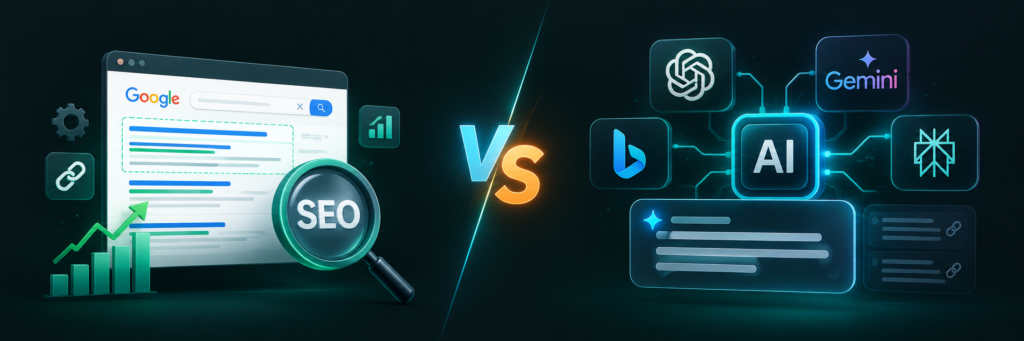
With traditional SEO, you judge progress by where you rank and how many clicks you get. AI SEO works on different signals. What matters is whether AI tools mention your brand and cite your pages when they answer questions. So you measure it differently too, tracking AI visibility and referral visits from tools like Perplexity alongside your usual organic traffic. The two aren’t rivals, though. Good rankings often lead to AI citations, and being seen in AI answers builds trust that helps your organic clicks. Because they feed each other, the timelines overlap, and running both makes sense.
Check out here – AI SEO vs. Traditional SEO: What Is the Difference?
How to Measure AI SEO Results
Don’t rely on a rankings report alone. Begin by checking your AI visibility, meaning how often your brand appears on ChatGPT, Gemini, Perplexity and Google AI Overviews. Keep an eye on brand mentions and how frequently your pages get cited. In your analytics, split AI referral traffic out from normal organic visits so you can see each clearly. Organic impressions and keyword rankings still deserve a look every month. But the numbers we care about most are qualified traffic, leads and conversions. If those aren’t moving, visibility alone won’t mean much to your business.
Why AI SEO Requires Continuous Optimization
Getting visible is only half the job. Staying visible takes ongoing work, and here’s what keeps changing underneath you.
Changes in AI Search Systems
AI platforms change how they work far more often than most people realise. They update their models, switch data sources and tweak how answers look. A page that gets cited this month might drop out after the next update. We review client visibility regularly so we can catch these shifts early and adjust structure, schema or formatting before it costs you traffic.
Changes in Search Behaviour
People don’t search the way they did a few years ago. They type longer questions, chat with AI tools to compare options and expect a clear answer straight away. Some still begin on Google, while others skip it entirely and head to ChatGPT. Content built only around short keywords can miss all of this, so pages need regular updates to match how your customers search now.
New Competitors and Content
While you’re working on your visibility, so are your competitors. New players appear, and the ones already in your market keep publishing content aimed at the same questions you want to answer. If their answers are clearer or more up to date, AI tools may quietly swap you out for them. Regular optimisation keeps you in the running and protects the ground you’ve gained.
Changes in Website Content
Your website won’t stay the same, and it shouldn’t. You’ll add services, change prices, retire old pages and launch new ones. Every one of those changes affects how AI tools understand and cite you. Old information left sitting on a page, or links pointing nowhere, can chip away at trust. A quick content audit every few months keeps everything accurate and properly linked.
Changes in Search Queries and User Intent
The questions your audience asks today won’t be exactly the same next year. New trends and products create fresh searches, and some older ones slowly disappear. Even when the words stay the same, the reason behind them can change, say from early research to being ready to buy. Keeping track of this helps you refresh existing pages and plan new ones that fit.
Need for Ongoing Content and Technical Improvements
There’s no point where AI SEO is officially done. Content gets old, new topics come up, and technical problems creep in as a website grows. A plugin update can break your schema, or a small change can slow your pages without anyone noticing for weeks. Steady improvements keep your site healthy and trustworthy, and that’s what turns early wins into visibility that lasts.
Conclusion
So, how long does AI SEO take? For most businesses, the first signals appear within three months, growth becomes steady between months three and nine, and a proper AI search presence takes shape after nine to twelve months. Nobody can promise you an exact date, and you should be wary of anyone who does. Track your progress through visibility, citations, traffic, leads and conversions instead. Consistent, long-term work is what makes the results build on each other. If you’d like to know where you stand right now, book a free AI SEO audit with SEO India Online.

Rajive Rana
Rajive has spent 18 years building search programmes for brands across India, the UK and the US — from local service businesses to enterprise ecommerce. He writes about the parts of SEO that survive algorithm cycles, and leads the AI visibility practice at SEO India Online.
Connect on LinkedIn